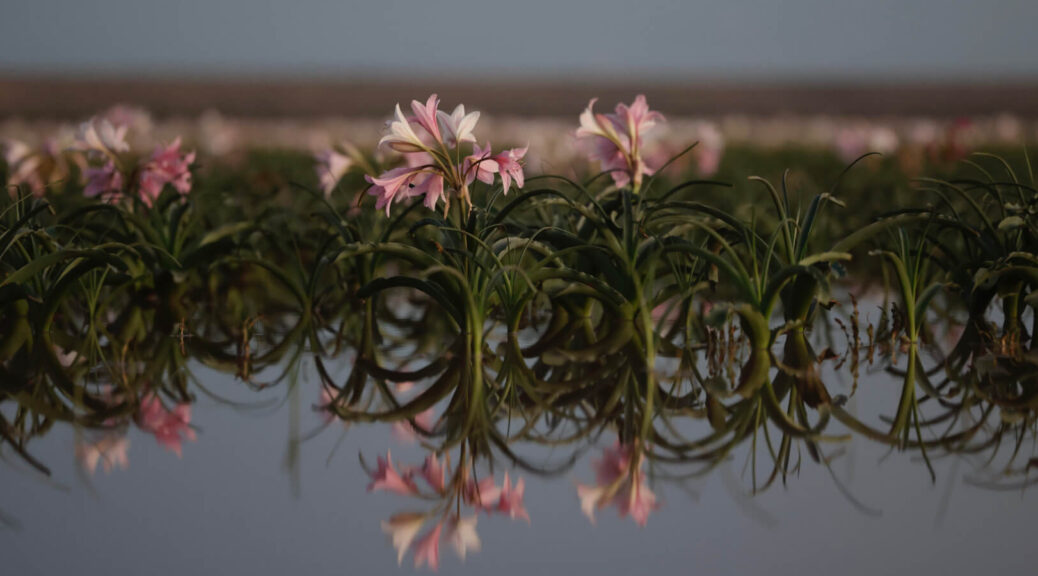
Namibia’s most spectacular floral phenomenon is found at Sandhof Lily Pan. Blink and you could miss it. By Candice Wharton
I’d heard of the Sandhof lilies for years. Although we’ve been in and out of Namibia plenty of times, we’ve never been there at the right season. The lilies only flower after good rains, which typically fall in February through to March.
This year, we’d headed to Elands Bay to spend Easter with my mom, my brothers and their families. Our children are grown and weren’t going to be around for the long weekend. Then Tracks4Africa posted that the Sandhof lilies would be in flower over the Easter weekend.
A map check revealed that it would take us 11 hours to get to Sandhof Farm from Elands Bay. It was Friday when the idea was born. A call to the farm revealed that Sunday and Monday were to be the best days – enough said. Since our car is always set up and ready to roll, we didn’t need much of an excuse. And with our children away, I thought the adventure would be a good way to end off the weekend.
Getting to Sandhof
We took the N7 north to the Noordoewer Border Post, where it becomes the B1 into Namibia. Important heads-up right now: foot-and-mouth disease restrictions are being strictly enforced, so leave all meat, cheese and dairy at home. [Note that the FMD restrictions include cooked and tinned meat – T4A.] We moved through the border fairly quickly and found diesel at every stop along the way. From Noordoewer we made our way toward Maltahöhe, taking the legendary C19. The last 37km of gravel road to Sandhof Farm takes at least an hour, more if it’s been raining.
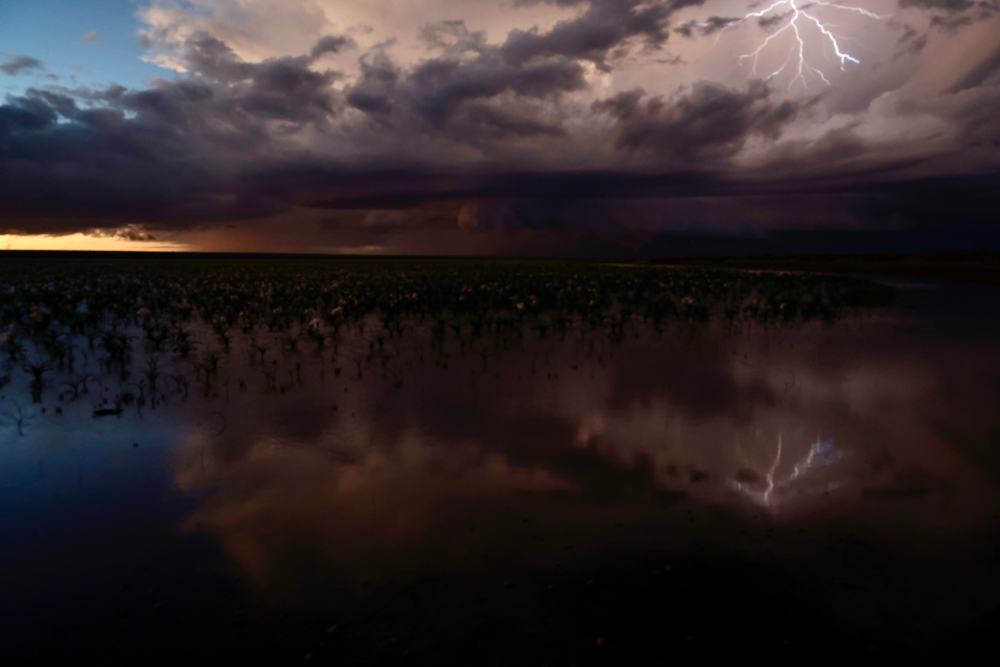
The area had received unprecedented rainfall from 15:00, so that last stretch was in a seriously bad state. We’d also been caught by the storm and were running late. In fact, we were advised not to attempt the road to the farm. But the rain stopped at 19:30 and we made a pact to turn around if it felt unsafe. We hit a few genuinely hairy patches but my husband was comfortable to push through. The farm gates are open from 07:00 to 19:00 – I would advise getting there before dark.
Camping at the lily pan’s edge
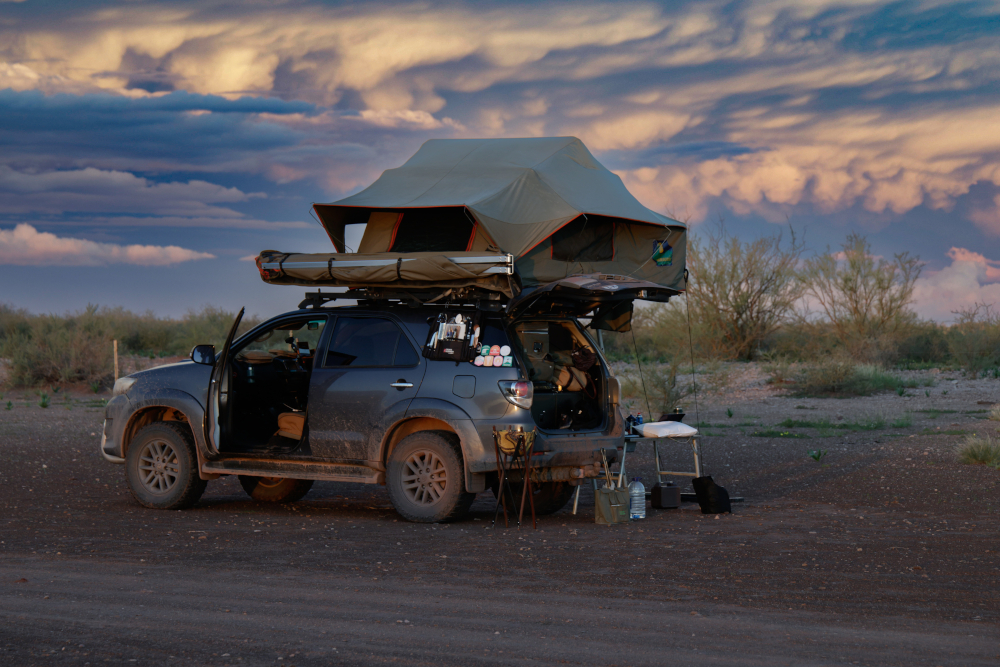
The Sandhof team were incredibly welcoming and pointed us toward the best section of the lily pan to set up camp. Since we weren’t sure if we’d relocate in the morning, we kept it simple. We opened the rooftop tent, made the bed and crashed, exhausted after a full day on the road.
The farm has been in the Morgan family since the 1800s, and Oliver and Maritza open the gates to visitors during the rare years when the lilies bloom. They were incredibly generous with their time and knowledge. Maritza’s mosquito repellent tip for the morning hours was one we really should have taken more seriously.
First impressions
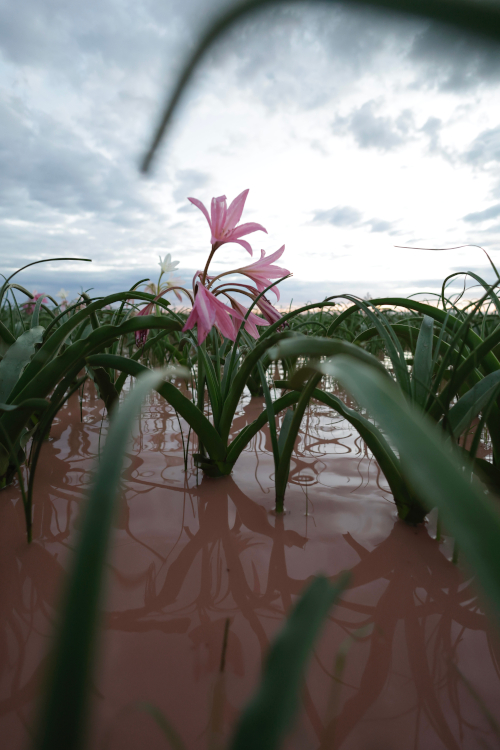
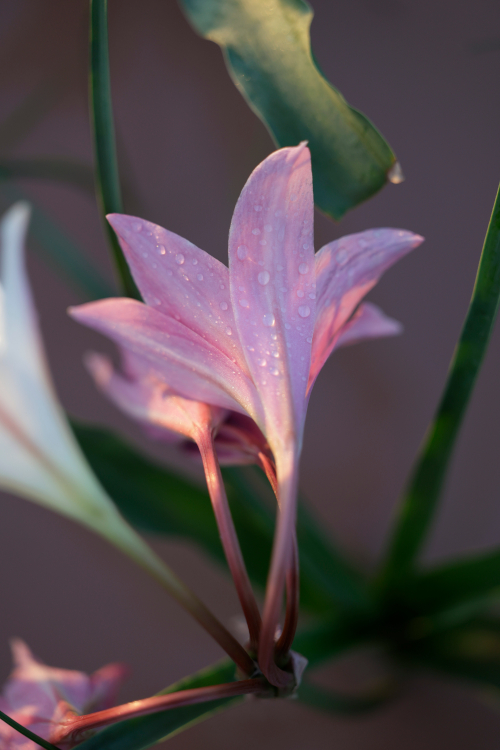
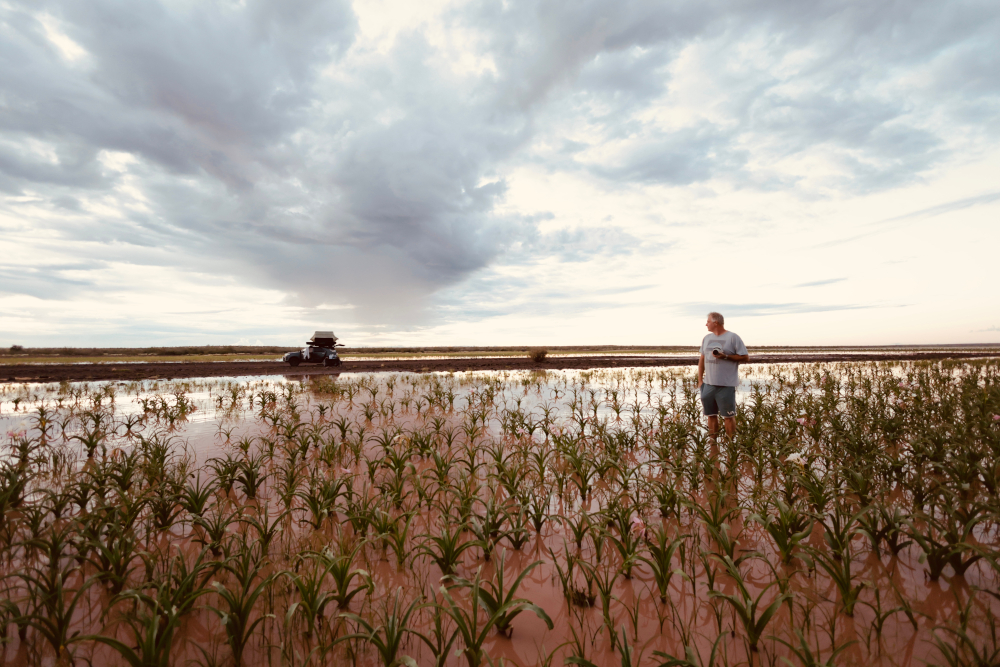
After snoozing the 05:00 alarm once or twice, I stepped out into the pre-dawn blue – and just stopped. To stand in 700ha of Crinum paludosum in total silence with the sun coming up… there’s nothing quite like it. I’m a photographer, I’ve been doing this for years and I genuinely cannot get a photograph to fully capture the experience. We waded out into the lilies and I got absolutely demolished by mozzies. The mosquitoes were most active between 05:00 and 07:00, not at night as you’d expect. I shot until the light went hard. We had Oliver’s permission to fly the drone too and the aerial footage of 750 hectares of lilies is something else entirely. Always ask permission first as drones are not permitted everywhere.
Getting the shot
The best time to photograph the lilies is early morning or in the evening. The light coming up behind you and falling directly onto the flowers is exceptional. In still conditions the reflections in the water are something special. Get as low as you can, almost at water level. I used my picnic blanket with waterproof bottom for the low shots and we also had our chairs out. If we weren’t wading, we were lying on the blanket to get the most interesting perspectives.
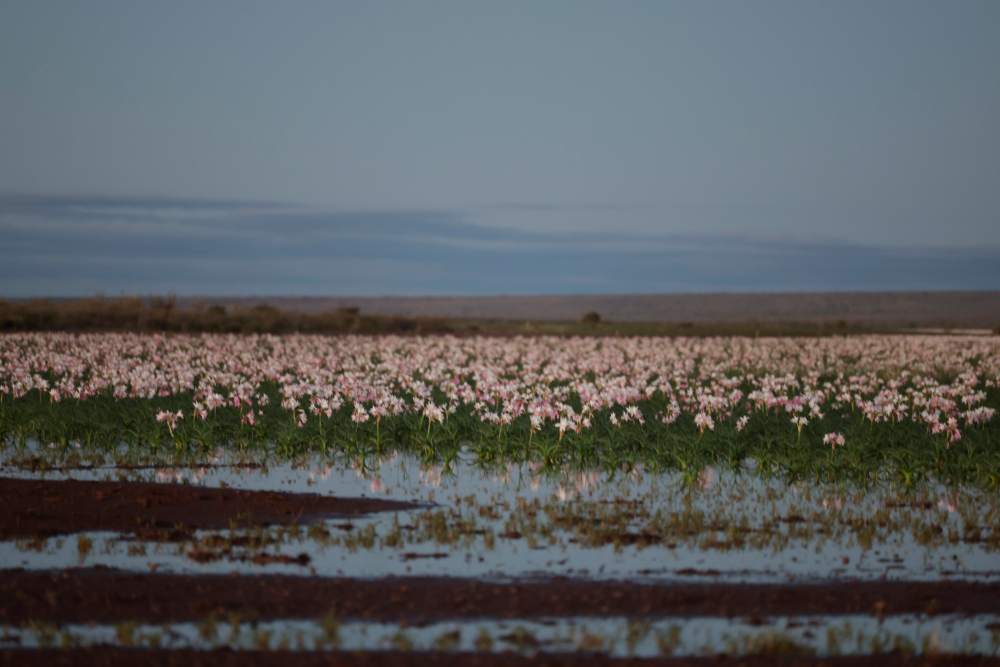
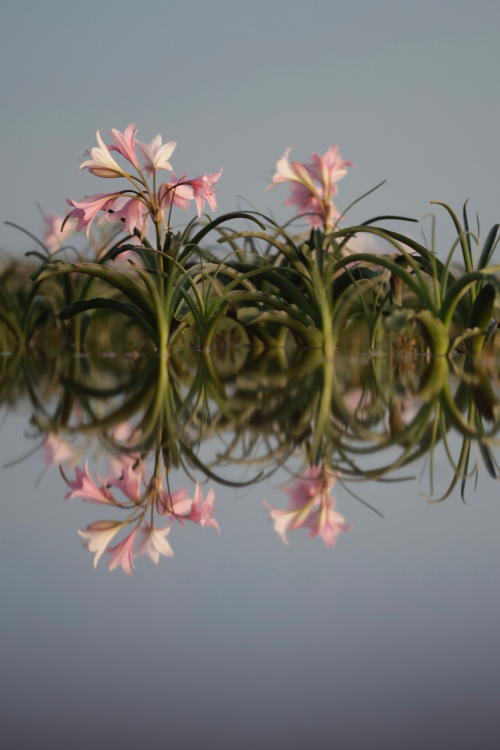
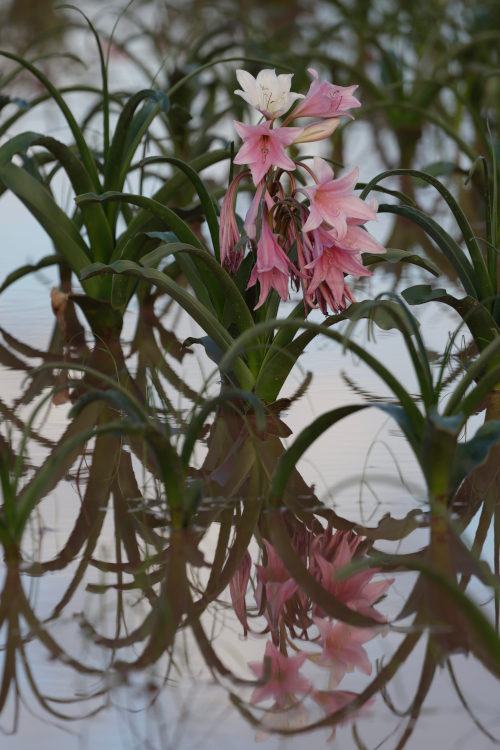
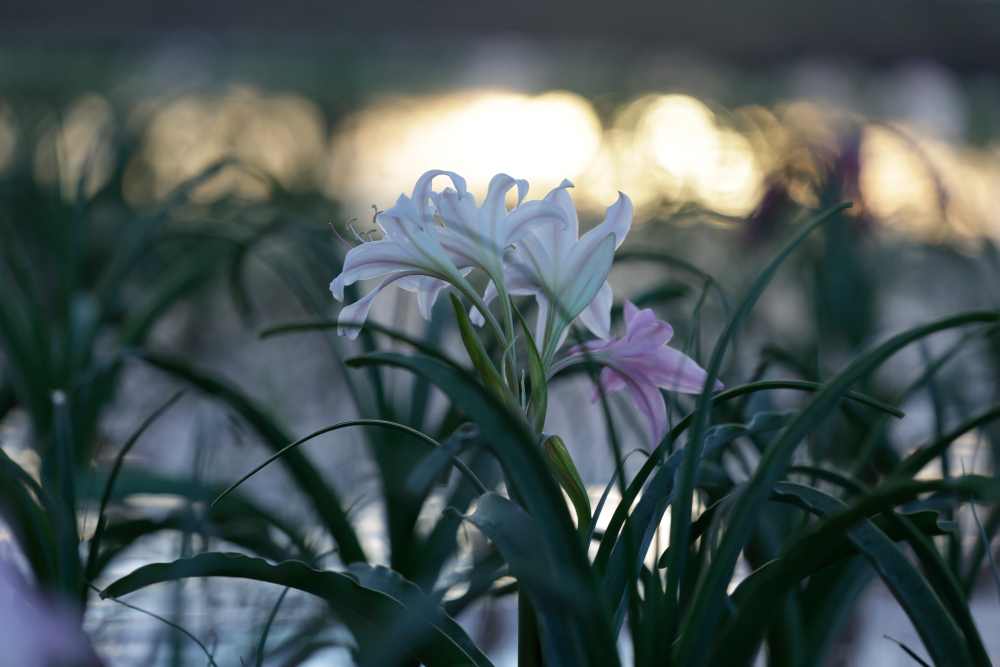
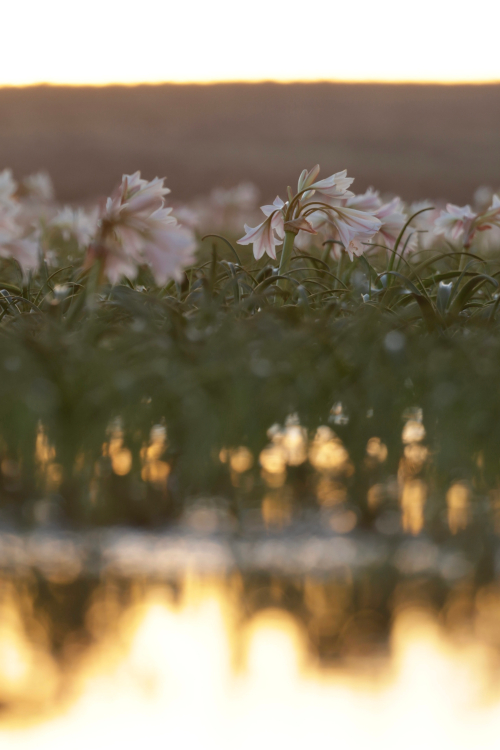
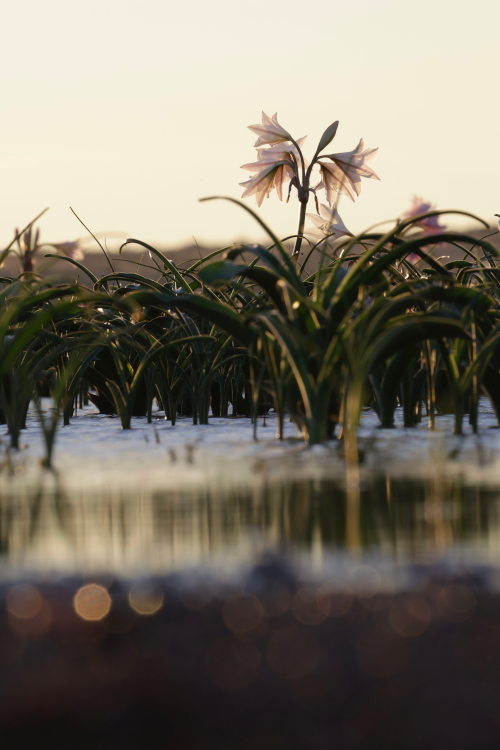
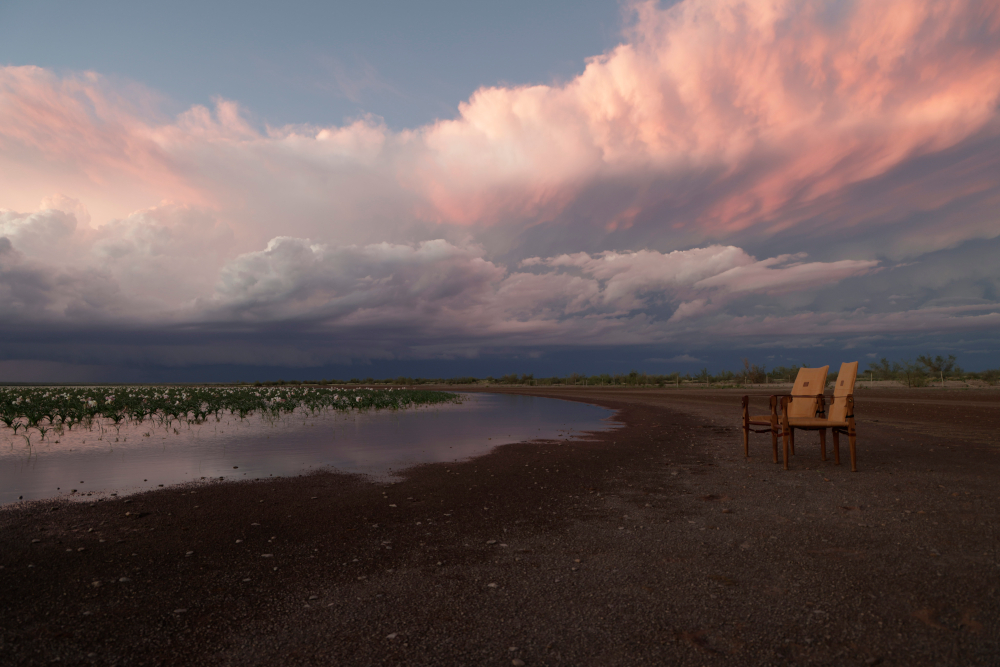
Afternoons generally bring wind, which puts ripples across the water and makes sharp images tricky. So we used the middle of the day to explore other sections of the pan, eat and rest. The evening surprised me as a full Namibian storm rolled in. That dramatic sky over the lilies gave me some of my best shots of the whole trip. Stay out, be patient and see what the sky does. Remember water is a reflector.
Traveller tips
Get your head around the fact that seeing the Sandhof lilies will always involve a last-minute mission. The Crinum paludosum needs 15–30cm of water in the clay pan to trigger the bloom. Once the flowers open, you have 3–5 days to see them in their prime. [The lilies can persist for up to a week and Sandhof Farm will be open to visitors until Saturday 11 April 2026 – T4A.] This is not a trip you can schedule in advance. Keep your rig ready, follow Tracks4Africa on Facebook/Instagram and Sandhof Farm, and be in a headspace where you can go when the call comes.
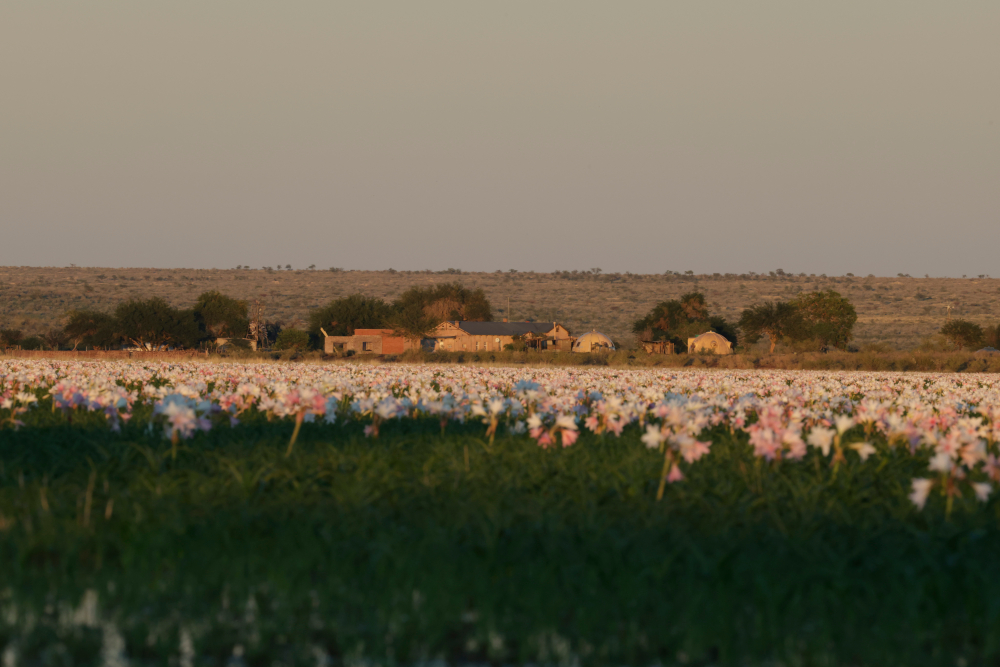
Top up with diesel in Maltahöhe before heading out on the D861. Leave all meat and dairy at home if crossing at Noordoewer. The road is manageable in dry conditions but a completely different animal after rain which is likely, given that rain is exactly what brings you there. The lily field covers around 800ha and only blooms once every few years, so if you hear they’re flowering, don’t sit on it. Pack the car and go.
Big thanks to Tracks4Africa for the post that kicked this whole thing off. And to Oliver and Maritza at Sandhof Lily Farm, thank you for everything. Absolute legends.
About the overlander
A photographer who describes herself as wild at heart, Candice Wharton loves capturing Africa’s natural splendour. To see more from her travels, follow her on Facebook or Instagram.
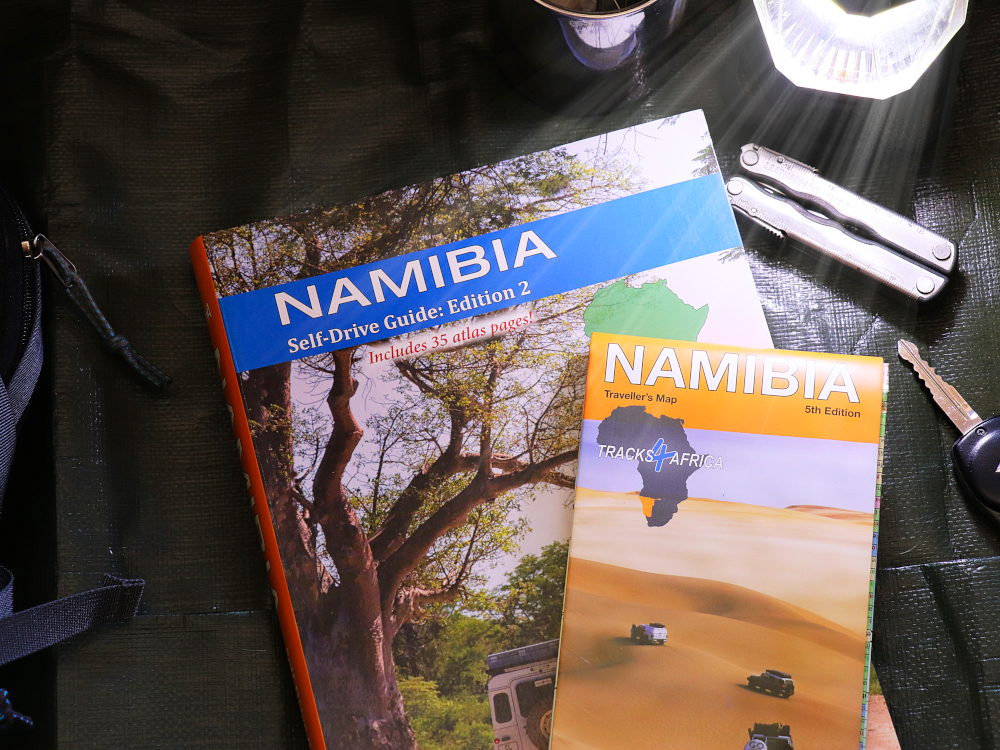
Headed to Namibia? Rely on the Tracks4Africa Namibia Self-Drive Guide and Namibia Traveller’s Paper Map to get you there. The guide offers essential information on where to stay, how to get there, and what to see and do. Featuring distance and overlander-tested travel times, the paper map is perfect for both trip planning and navigating. Order them aa a travel bundle to save.
