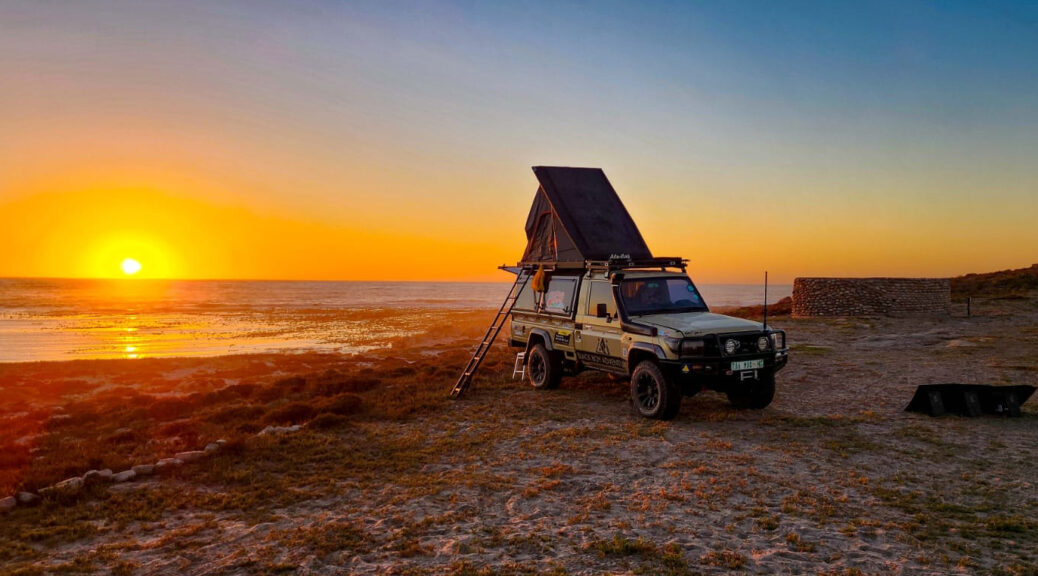
No electricity, no cellphone coverage, no crowds. Instead, get your fill of silence, sea views and unlimited nature when you camp along the Namaqua coastline. Aslam Mxolisi Tawana of Black Boy Adventures reports back on his trip to Namaqua National Park.
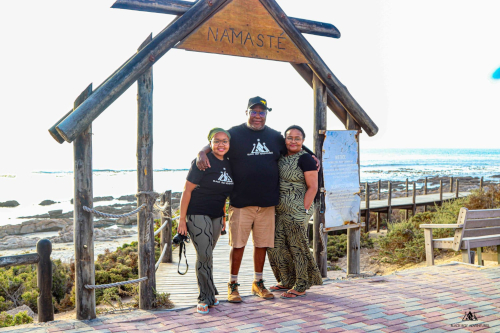
Camping on the Namaqua coast has always been on my bucket list. The idea of pitching my tent right on the beach, with nobody and nothing else around. That experience of being in an untouched place was one I wanted to share with my family: my wife, Moipone, and daughter, Sakinah. They had been on camping trips before, but this would be their first time going fully off grid. Two friends, Moemedi Kepadisa and Egomotseng Bodumelo, also joined, while my cameraman, Musa Senate Jonathan, rounded out our expedition.
I believe my home province, the Northern Cape, is as good as it gets for overlanding – and yet I’d never camped along our coastline. One of the reasons is its remoteness. From my home in Kimberley, the beach at Jeffrey’s Bay is closer than the one at McDougalls Bay (Port Nolloth). What’s more, there’s no tar road leading to the pretty bays in Namaqualand where I pictured pitching my tent. But for Black Boy Adventures, a 4×4 outing is exactly what revs our engine, so I decided to rectify the situation.
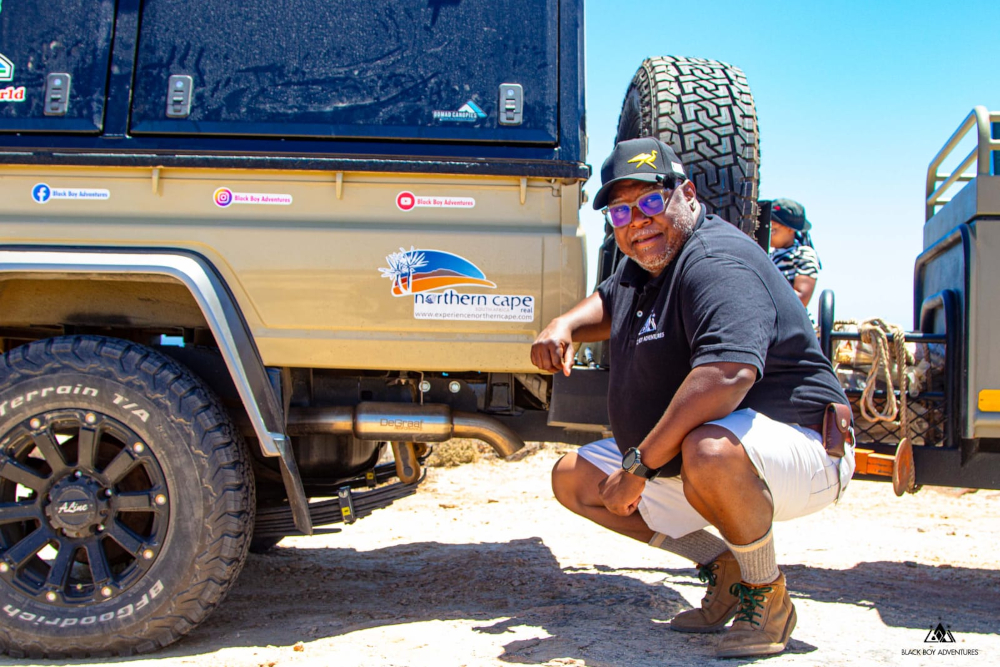
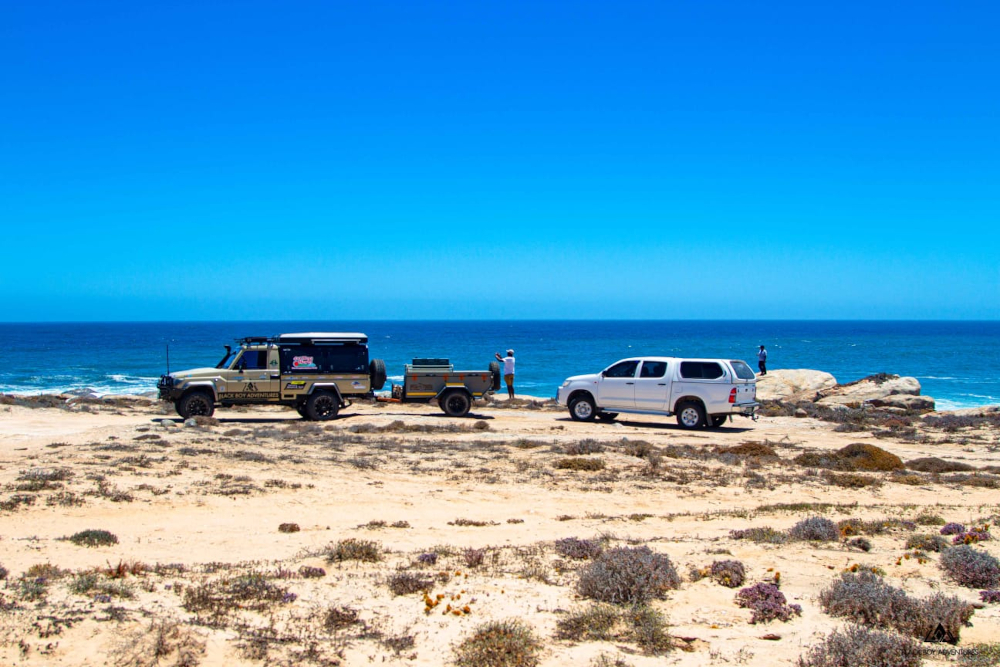
The plan was a round trip of over 2,400km, heading deep into Namaqualand and travelling on gravel or thick sand along the coast. Our destination: Namaqua National Park. It would offer more security and support than the wild campsites further south, but with the same feeling of freedom. And so we set off in my kitted-out Land Cruiser, Musafir, and a standard Toyota Hilux double cab.
The long road to the sea
Just getting to Port Nolloth was a journey and a half from Kimberley. Our idea had been to stay over in Goegap Nature Reserve – I thought we could get there on a gravel road via Carolusberg. But when we arrived at a mine’s boom gate indicating no entry, it was clear we couldn’t proceed to the reserve. By the time we’d backtracked to the national road and got to Springbok, we were ready to call it a day. We got a good night’s rest at the Springbok Inn, a last touch of comfort before our camping would begin.
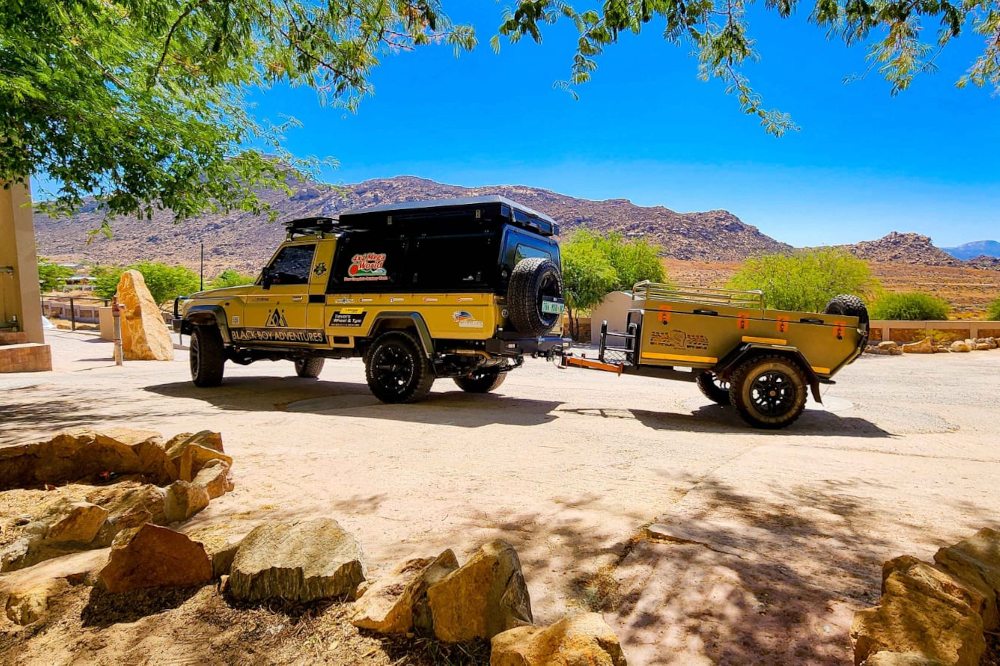
It was just as well we were in Springbok, because I’d picked up two vehicle issues. Firstly, the coupling between the Land Cruiser and the off-road trailer wasn’t making contact, meaning no lights on the trailer. Secondly, the sub tank wasn’t coming on. While the coupling was a quick fix, the issue with the auxiliary tank was more complex and I decided to leave it for our return. Fortunately, we were travelling with enough jerry cans – 80L in diesel and 60L in petrol – to ensure we had fuel for the remote parts.
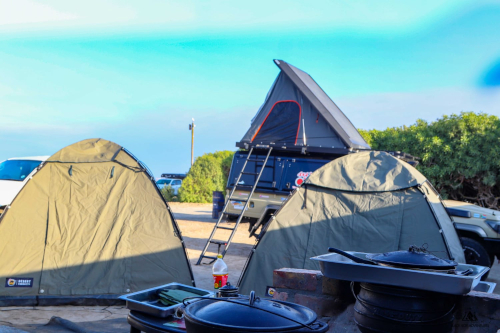
From Springbok we headed to Steinkopf, then travelled over Anenous Pass to make our way from the hardeveld to the sandveld. Stopping at the viewpoint on the pass, the Richtersveld’s beauty was spread out before us. We could already smell the special salty tang in the air. In Port Nolloth, we pitched our tents at McDougalls Caravan Park, sleeping right on the sea’s doorstep. Dinner was a hardbody (free range) chicken, slow cooked in a potjie.
Last preparations en route
When you camp on the Namaqua coast, you need to be fully self-sufficient. That means taking all your supplies, along with your own firewood and drinking water. The problem? Port Nolloth had no water and the supermarkets were sold out. Fortunately, we managed to buy 60L of water from an independent shop at the fuel station to fill up our large water container.
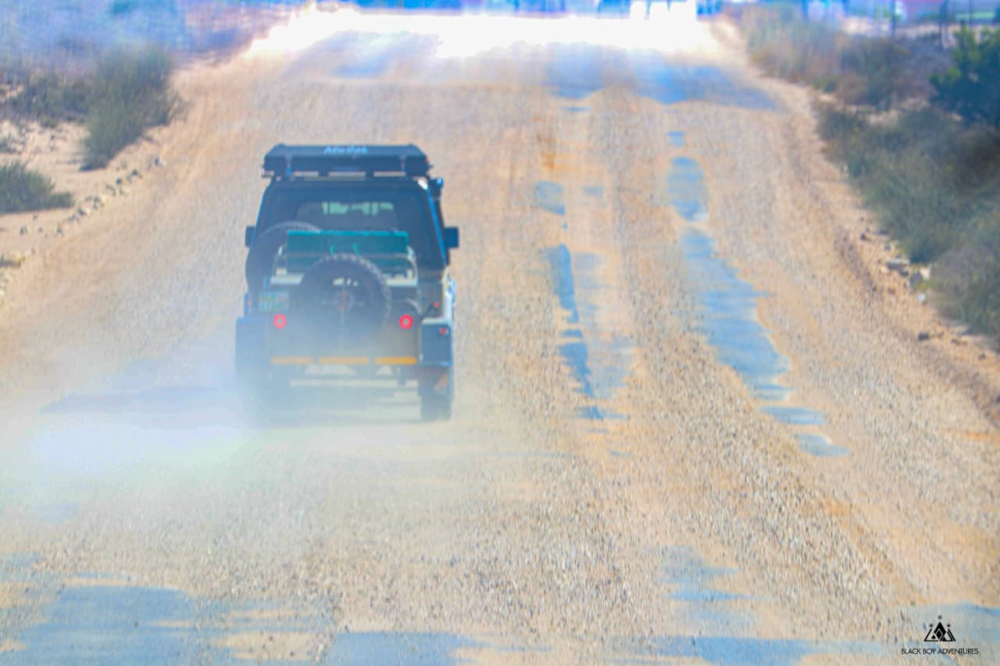
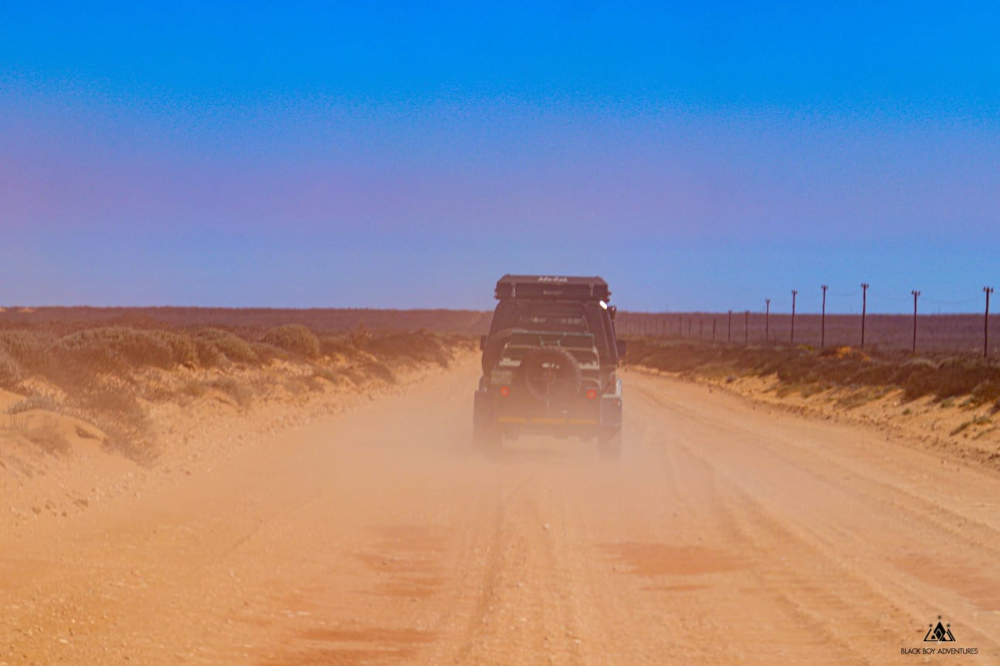
The real fun started when we set off for Kleinzee because we could get our tyres dusty. The gravel road was beautiful – yes, there was some corrugation and some sand, but I could drive in 4×2 all the way. The stretch between Kleinzee and Koiingnaas is tar, presumably because of the mining traffic. Our last stop before entering Namaqua National Park was Hondeklip Bay. This small fishing dorpie is atmospheric and proved a lifesaver for us. At the police station, we could get more water for washing up & showering. And at a local shop, we got yeast – otherwise we would have had no bread for our week in the park.
Boulderbaai adventures
A drive of around 20km took us from the park’s North Gate to Boulderbaai. A short section leads through private farmland – remember to leave farm gates closed if you find them that way.
The Boulderbaai campsite is magnificent: just a handful of stands overlooking the sea. Although there is no running water, nor power points, each campsite has a wind shelter. This small stone-built kraal effectively protects your campfire from the wind. There are also a couple of enviro loos – the cleanest, nicest smelling pit latrines I’ve ever used.
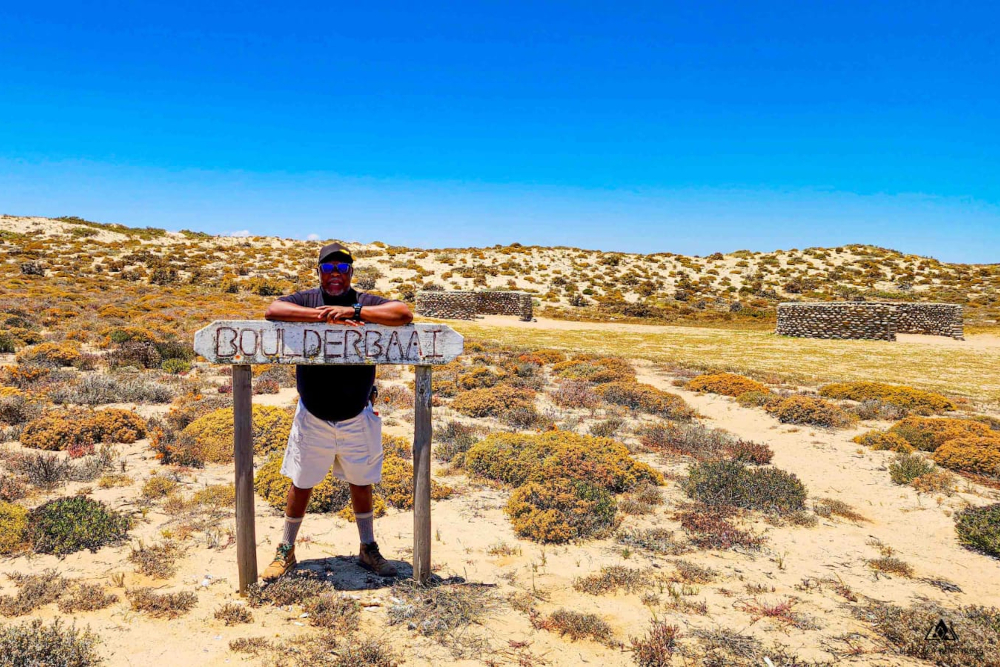
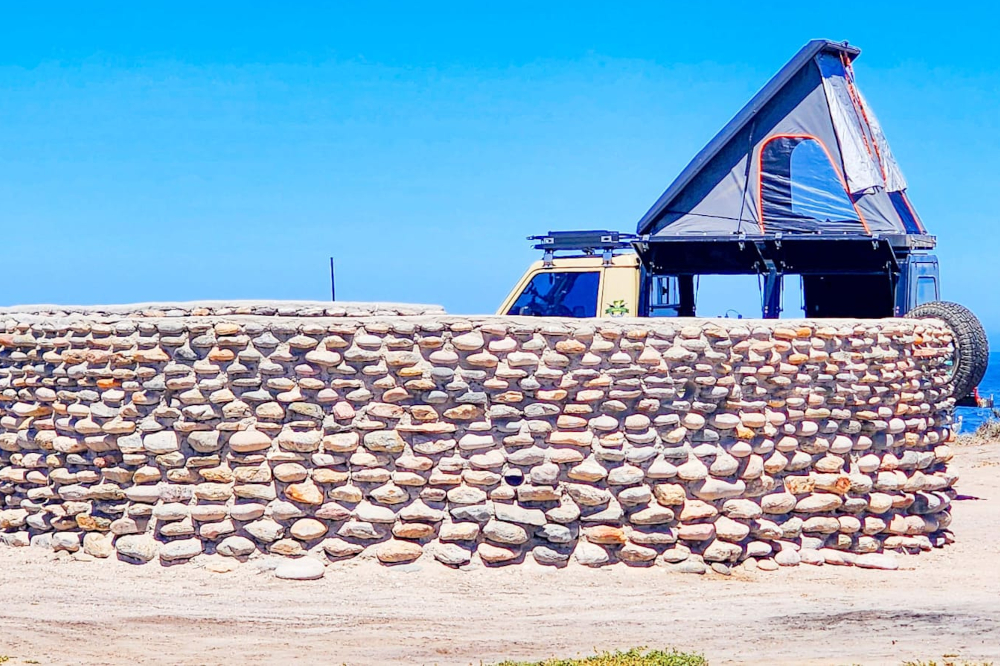
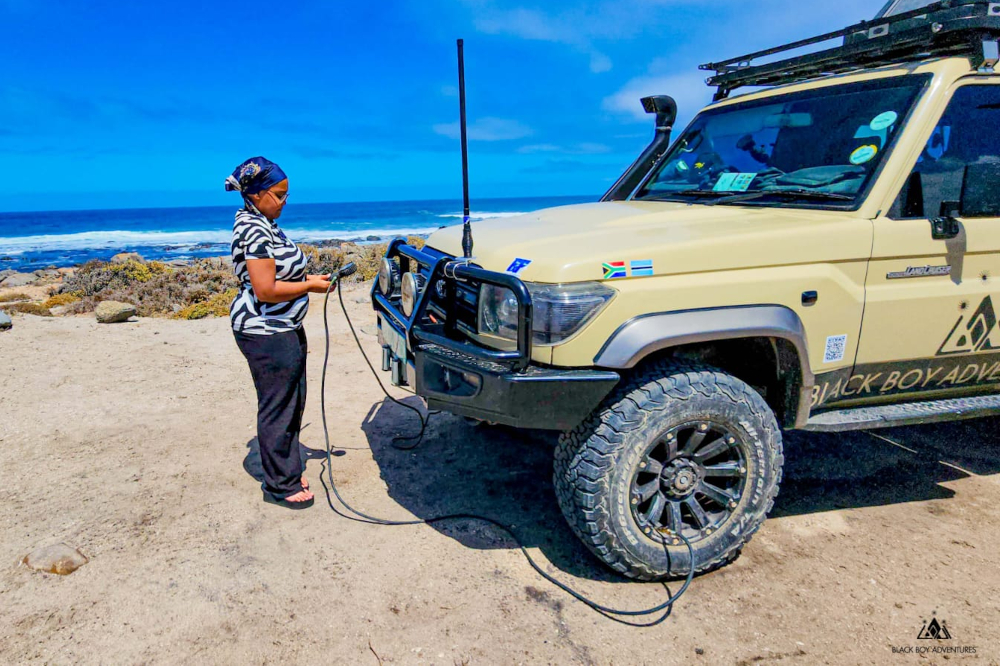
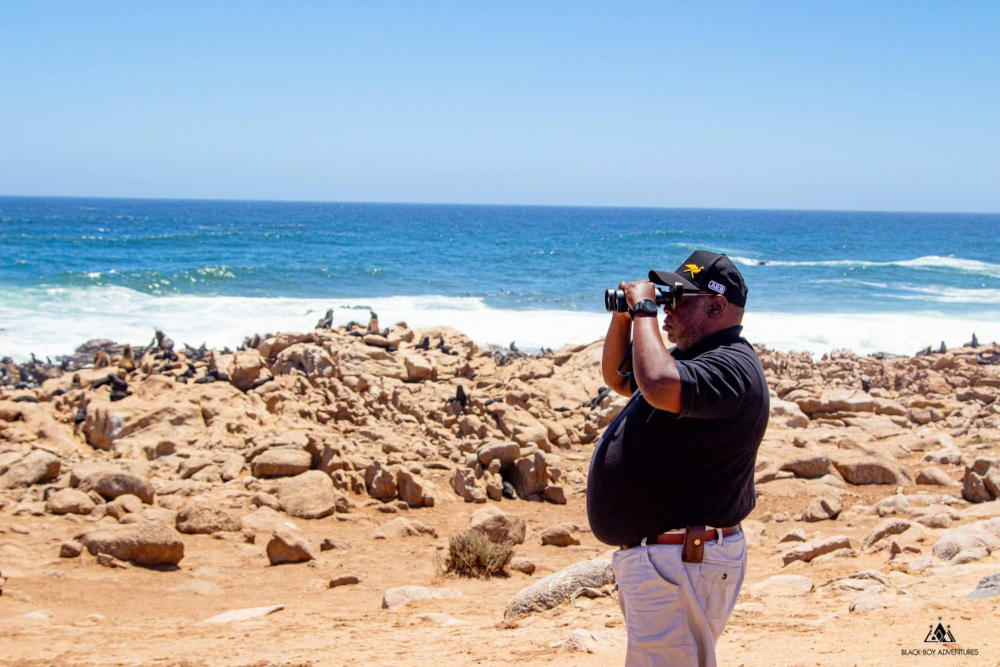
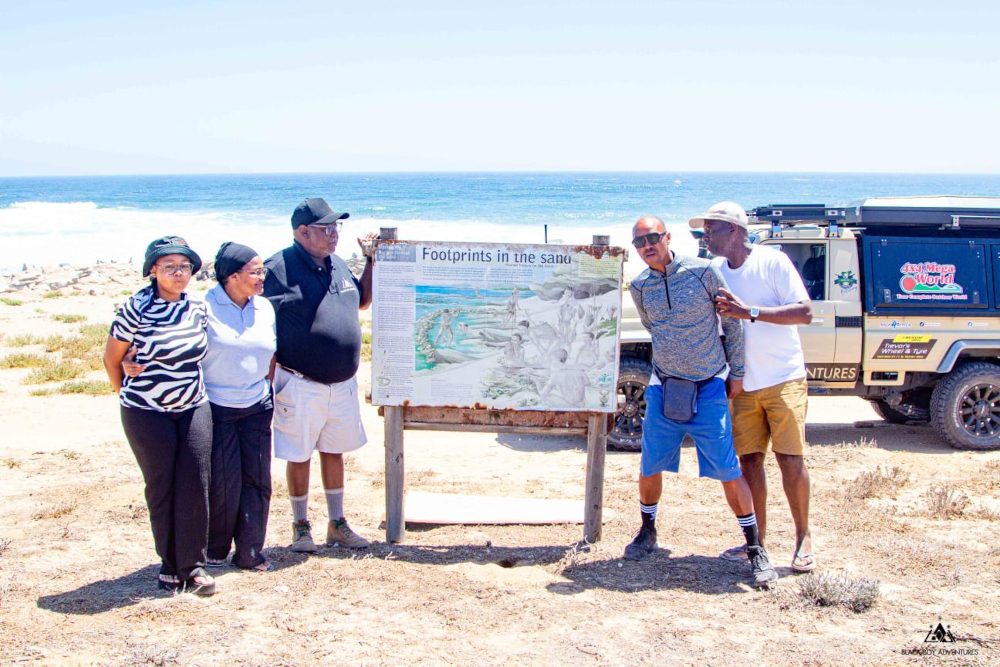
We’d timed our visit for after the summer school holidays and found ourselves alone in this beautiful place. While there isn’t much of a beach at Boulderbaai, there is a large seal colony nearby that is worth a visit. There must be thousands of seals there and they were very vocal! Moemedi dubbed them “Amadodana Ase Wesile” after the famous Methodist Male Gospel group.
According to the Tracks4Africa map, there’s a small spot of cellphone reception on a hill near Spoegrivier. Since Moemedi wanted to make some calls, this was welcome news and he headed off in the Hilux. When he didn’t return within the agreed time, I knew to go looking for him. He’d gotten bogged down in thick sand and, being on his own, was effectively stranded. Luckily, he managed to send a WhatsApp to his brother, who alerted the park rangers and even the police in Hondeklip Bay. So we all converged on him and, before long, we were back in camp, in time for a spectacular sunset.
Beach camping at Kwass se Baai
I was in my element driving to our next campsite. The thick sand provided a proper 4×4 challenge and the unspoiled coastal scenery drew us on. We even did a spot of game viewing on the way, passing some gemsbok.
Kwass se Baai is the most picture-perfect setting: a pretty sandy beach perfect for swimming and easy strolls. You don’t want to move from this spot. It’s enough to be there, soaking up the sun and listening to the sound of the Atlantic crashing on the shore.
There are four campsites at Kwass se Baai: two up on a rise, two down by the water. Like Boulderbaai and the other campsites in the park, there’s no running water or electricity. But I’m fully geared for going off-grid. I packed a battery bank with a solar blanket, so we could keep our cameras charged and have lights at night. We took enough water, so we could make coffee, wash the dishes and have a shower without any worries. We were just as comfortable as if we were camping in a park with all the amenities. But we had the incredible seclusion of this remote coastline.
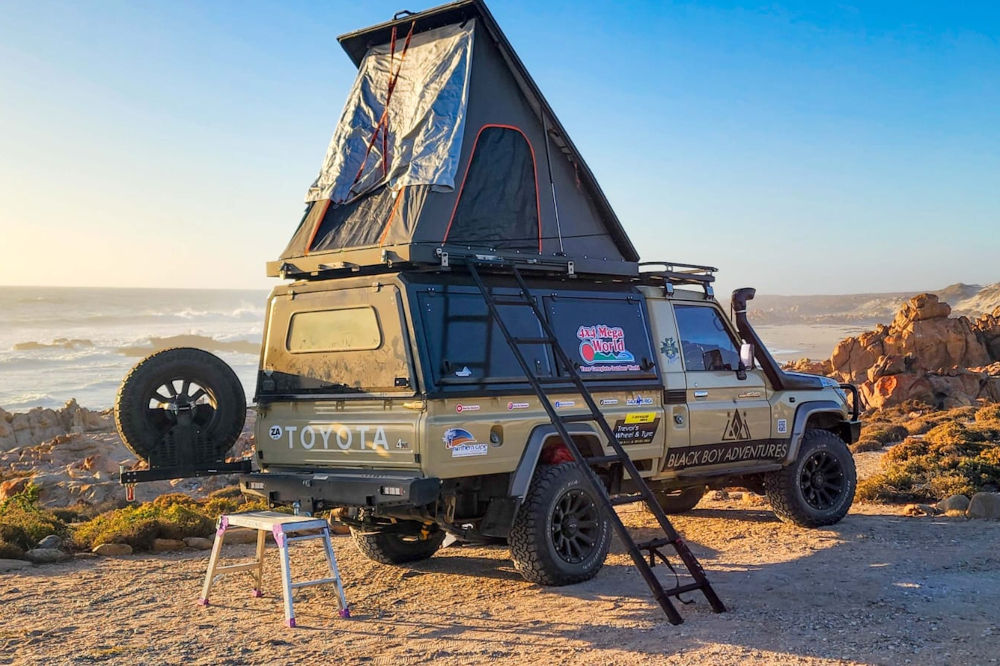
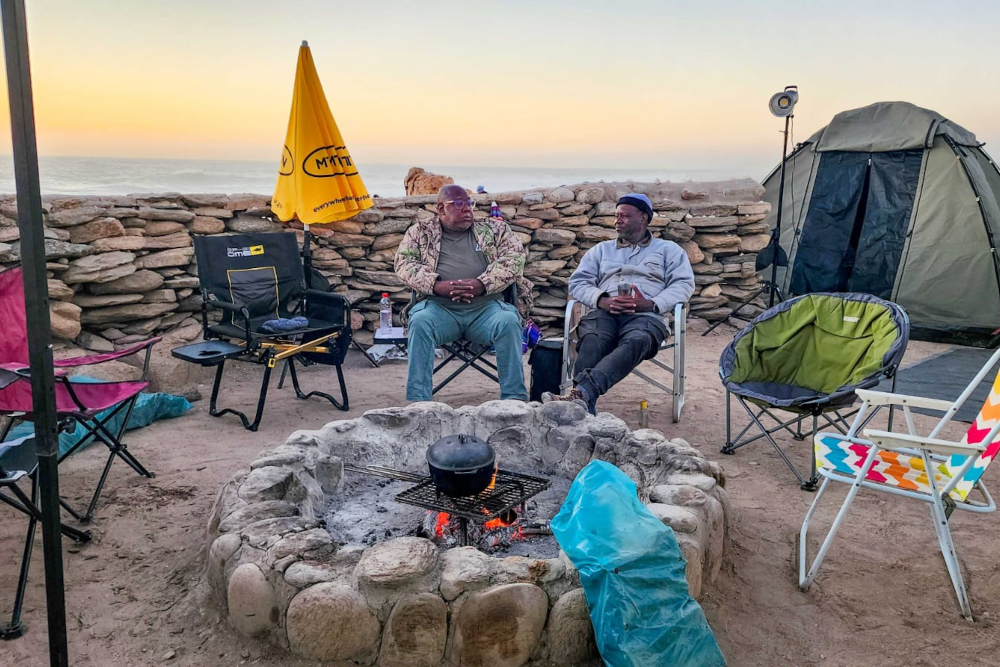
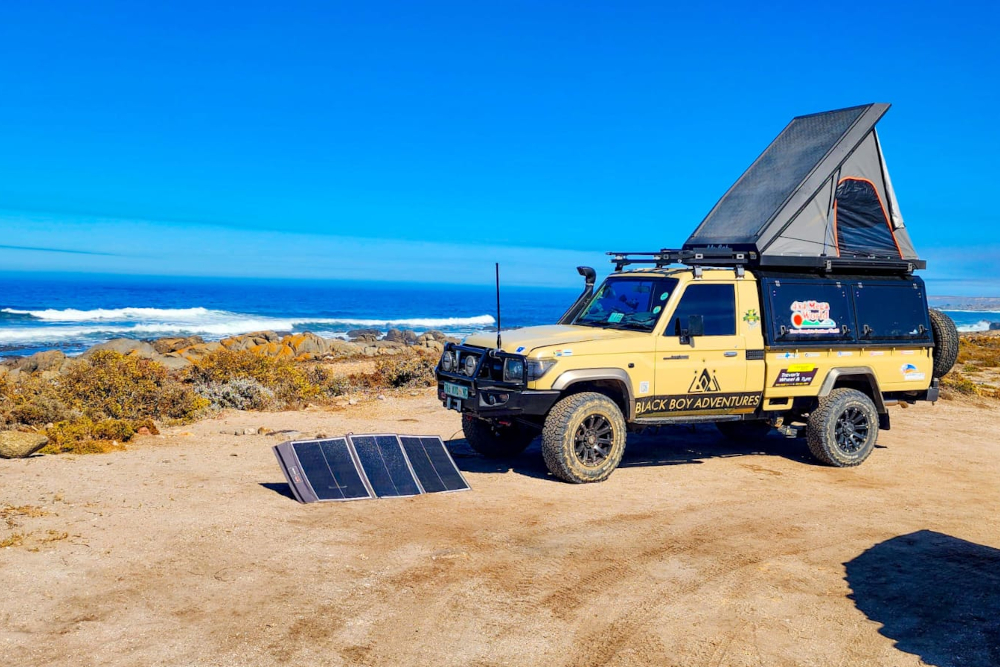
Our last two nights in the park were spent at Delwerskamp, some 20km from the park office at Groenrivier. We were running out of supplies by now, so it was useful to be able to stock up on wood and water at park reception. Outside the park is a small self-determination settlement, where we could buy cooldrinks and chocolates from a caravan shop.
Looking back
Our route home led via Garies to Springbok and on to Upington, where we spent the night. Over 10 days, we had gotten to know the Namaqua coast – lazy days spent reading or taking long beach walks. The sound of the sea against the rocks became our music. And with no cellphone reception, we could totally unplug and unwind. If you want to log off from the rat race, Namaqualand is your place to be.
Coming soon: Our detailed map on Namaqualand will be released in time for the 2026 flower season. With accurate information on distances, travel times, road surfaces and traveller services, it’s just what you need to explore this coastline. Watch this space!
