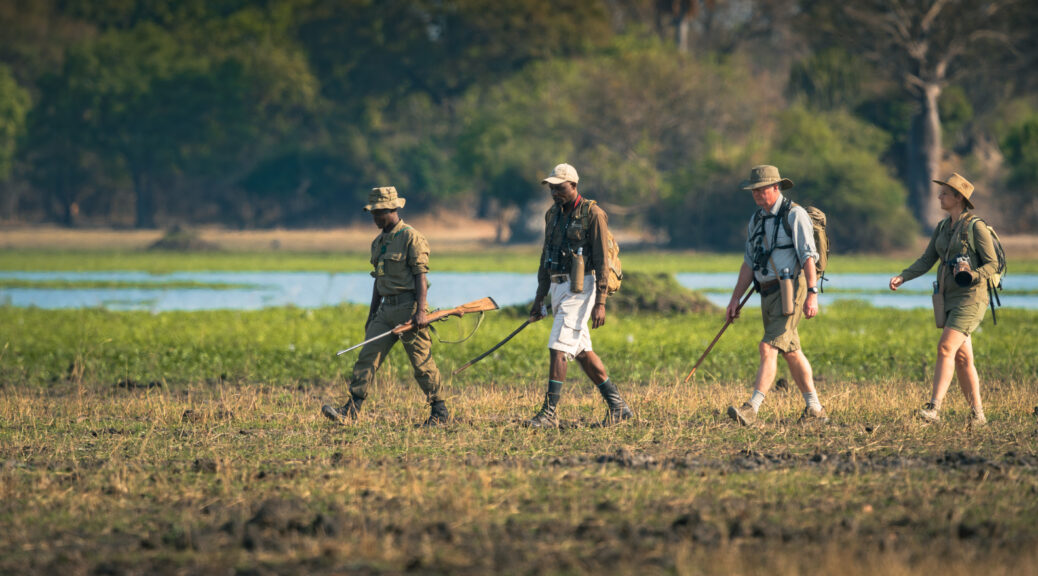
Rich in wildlife, beautiful trees and water, Malawi’s Liwonde National Park has all the ingredients for a memorable visit. Denis Costello reveals why you’ll want to do a Malawi walking safari in this magical park.
When I heard the excitement in the guide’s voice, I knew it was something special. It’s always fun to see an animal for the first time – a first for me at least, and a rare sighting for David Mkandawire, a guide with Central African Wilderness Safaris in Liwonde National Park. “Meller’s mongoose,” he said quietly. But there was no need to be quiet, as in the twilight we could see a mating pair, who had no intention of being distracted from the business at hand. I consulted the African mammals app on my phone, where it said that Meller’s is the “least known of the mongoose family”, a shaggy and shy animal found in Zimbabwe, Zambia and evidently here on the Shire River in Malawi.
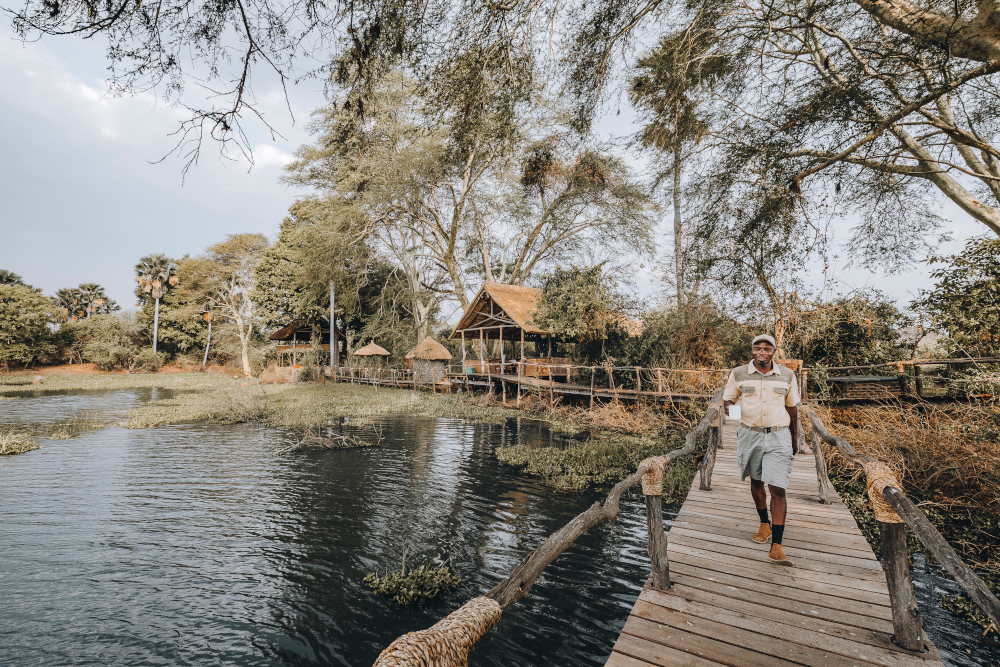
It was a pleasing end to a day that had started at 04:30 with a wake up at Mvuu Lodge and a pre-dawn gathering. The night watch warned me of elephants in camp – it was comical to see them carefully threading the trees on narrow sandy paths, asserting a timeless right of way. It created a little delay in walking out of camp, but we made it just as the sun broke the horizon. We walked south from camp, a little inland from the river, crossing a bone-dry floodplain amid palms and baobab. The best of the baobabs are protected by wire mesh, and it was a bit sad to see the state of some of those that were not, in various stages of elephant destruction.
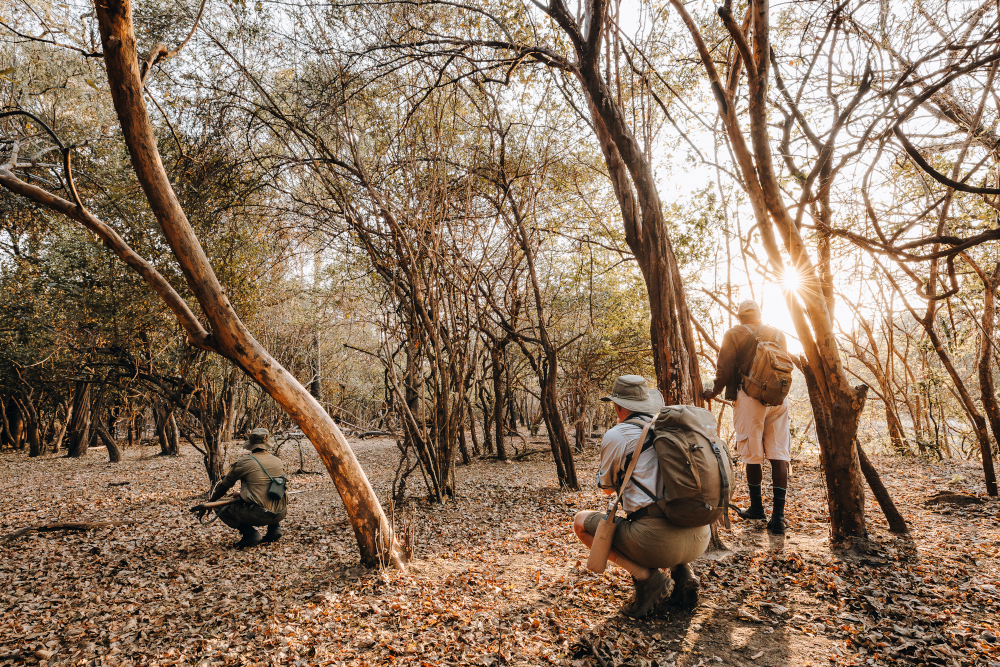
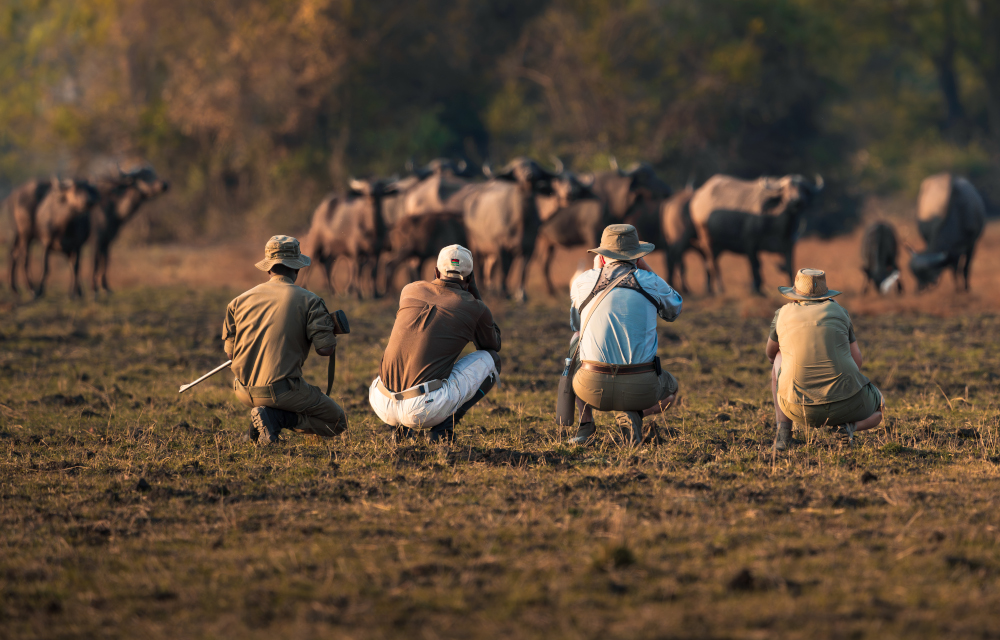
Soon, we were to meet more of these lovable villains, and it took some delicate manoeuvring to avoid them in a riverine thicket, trying to stay downwind and struggling to walk quietly – impossible in a deep cyan pot pourri of sausage tree leaves. David, and the African Parks scout Alan Mwitho, seemed to enjoy the challenge. We squatted down and could discern a small breeding herd just 30m away. The elephants were making more noise than we were, which no doubt helped us to avoid detection, and as soon as it was safe, David motioned for us to move on and out of the thicket.
As we walked back towards the water, we bisected herds of antelope – water buck and puku to the right, kudu and impala to the left. This walk was developing nicely, and we came upon fresh lion tracks and then the scrapings and midden of a black rhino. All the ingredients that make for walking safari perfection were in the mix: the river backed by Borassus palms lit by the rising sun, its waters thick with hippos. The baobabs of course, the profusion of animals. Now the tracks. Not just the big animals, but delicate prints of civet and porcupine dappling the sand.
Fascination on foot
We moved from grasslands into the shade of mopane woodlands – a variation of habitats is another alluring feature of the best walks. David’s sharp birding eye directed us to a Livingston’s flycatcher and a Böhm’s bee-eater, and he found the bee-eater’s nesting hole in the ground beneath a cucumber tree. In a place of such biodiversity, there was something of interest every few steps. A termite mound that doubled up as an elephant scratching post. A scattering of dead grass detritus that showed the entrance to a harvester termite colony, 2m below our feet. David paused by an innocuous bush that would be easy to dismiss – a red mustard – and explained how it’s a little pharmacy, with the branches boiled to make an infusion to combat headache and other ailments, and its twigs useful to make antibacterial toothbrushes.
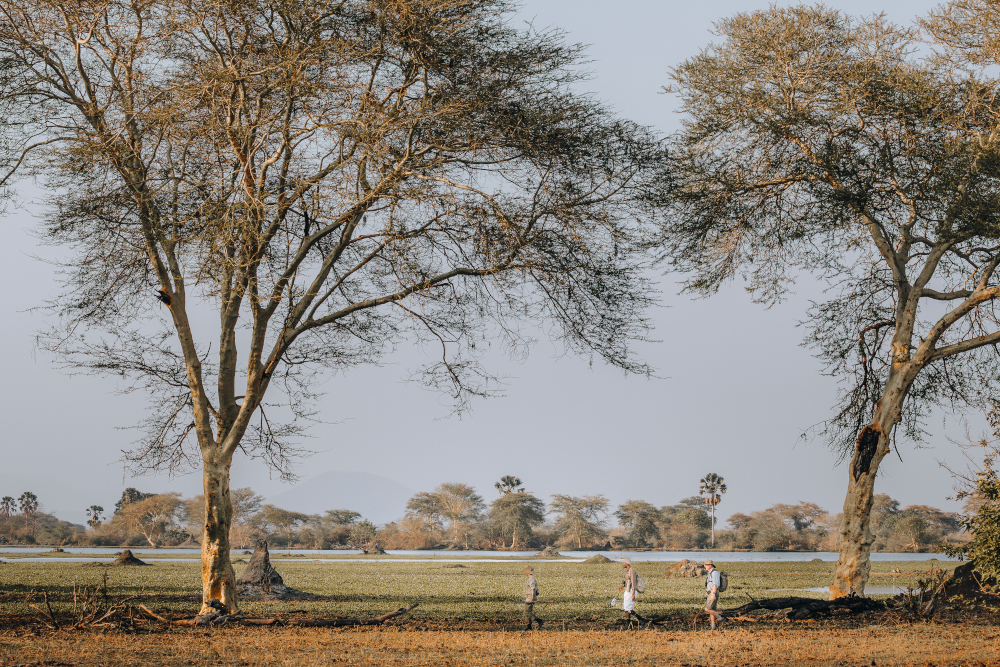
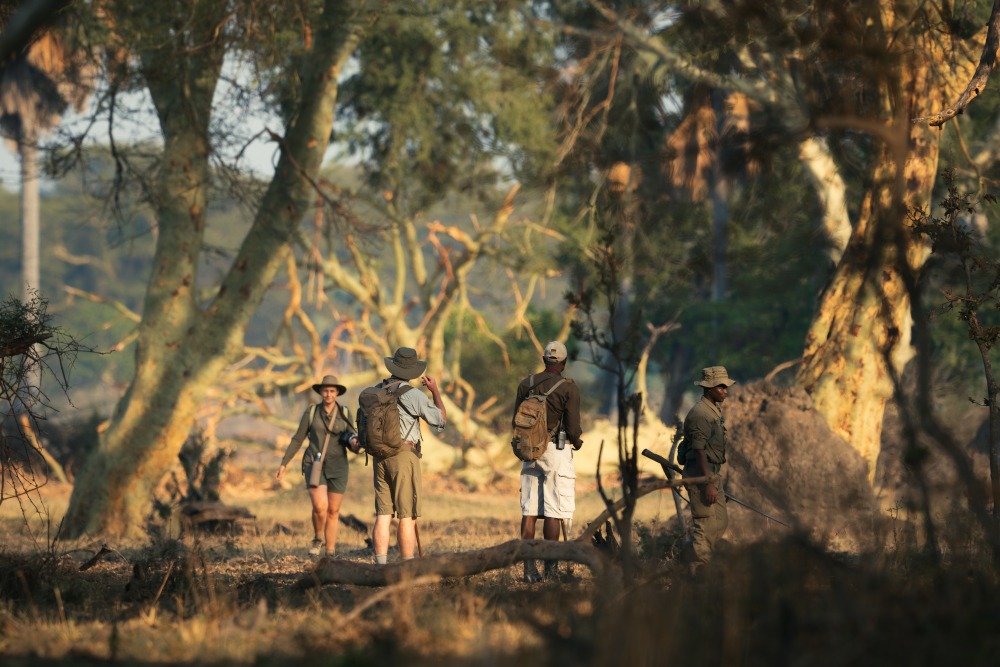
It was four hours of fascination on foot to the fly-camp. There, we found Doreen and her camp crew with a full kitchen tent nestled under fever trees and Natal mahogany. The dome tents looked fairly standard from the outside, but inside were fully furnished. A discreet distance from the tents, the bucket shower was screened from camp, but open to the river – splendid.
After a siesta, Doreen appeared with cake and banana and chocolate roulade – Chef Christopher was determined to make sure that the dining standards at Mvuu Lodge are maintained at his bush kitchen. We drove south, taking rutted tracks across the dry-season floodplain and only encountered one other vehicle along the way. The afternoon walk was shorter – October is the hottest month of the year in Liwonde – and the highlight was meeting a herd of buffalo in the open. Back in the vehicle, we came upon two snoozing lions near the Shire, and retreated to a safe distance to get down for sundowner drinks. As the sun moved behind a perfectly shaped tall sterculia, a glossy ibis glided to roost and a porcupine trotted on urgent business across the plain towards the river, nose to the ground. Prime roosting spots were already filling – dozens of open bill, sacred ibis and great white egret sharing branches. Away from the water, guinea fowl and red-billed quelea doing the same. It was on the twilight drive back to camp that we saw the Meller’s. While that was the highlight, we also came across three civets, a side-striped jackal, another porcupine and countless sengi. Liwonde is a very productive park.
A wild and lovely place
The next morning’s walk was again full of wonders. At times, we just moved in silence, appreciating the temperature, the light, the sounds, and simply being in this wild and lovely place. Then, something would catch David’s eye, and we would go into classroom mode. A hippo whisker on the ground. The smooth corky texture of the bark of a toad tree. The bulb of a red spider lily freshly excavated in the night by a porcupine. He picked up a well-preserved warthog skull and showed us its preorbital gland grooves, part of their scent-marking anatomy.
Back at Mvuu Lodge, the elephants had moved on, with no evident damage. Sitting quietly on the deck of my chalet, I had a wild menagerie for company. A metre-long monitor lizard scampered below and into the outdoor shower area. A solitary yellow baboon sat under a tree, concentrating on a seed pod; they don’t raid the rooms and are more likeable than the bigger and more aggressive chacma baboons. Under the deck, a female bushbuck browsed in its shade. Almost within touching distance, a cardinal woodpecker landed.
Later, on the river, David turned off the boat engine and we drifted with the current. We passed our fly-camp spot, recognising the trees – the tents gone, of course. The lions were still where they had been a day and a night before. A pair of goliath heron stood sentinel, and behind them were waterbuck in numbers more usually associated with impala. A black skimmer was chased by a pied kingfisher and, to the west, a skein of glossy ibis transected an amber sky. A few days before, I was only vaguely aware of Liwonde National Park and the Shire River. Now, it’s one of my favourite places.
This piece first appeared in Walking Safaris of Africa (2025).
About the author

Denis Costello is an experienced wilderness walker, FGASA-qualified guide and a writer specialising in wildlife travel. His latest book, Walking Safaris of Africa, covers hundreds of walking safari opportunities in Southern and East Africa and is the essential companion for all kinds of guided walking safaris. The book offers advice on when to go, what to bring and reserve-by-reserve information about the terrain, ecology and walk operators.
Need to find your way around Malawi? Now in its 3rd edition, our Mozambique and Malawi Traveller’s Paper Map covers the full road network – on tar, gravel and sand. Like our other country maps, it features both distance and travel times between towns. You have the peace of mind knowing all roads have been driven by the Tracks4Africa community.
