
In Botswana’s Okavango Delta, campsites in Moremi and Khwai put us at the heart of the action. By Campbell Houston
In winter 2025, with a couple of months off work and university, my older brother, Callum, and I decided to embark on an 8-week expedition. In our heads, it seemed like a pretty straightforward math equation. Take two 20-somethings with some free time on their hands, a 200 series Land Cruiser and an itch to be back in the bushveld screaming to be scratched.
Our conclusion was: 55 magical sunsets, 5 countries, 11,000km, and the certainty we would be braai masters by the end of this trip. That this would be the trip of a lifetime.
Fast forward to today, and I can say we scored full marks for our answer.
High on the list was Botswana, where we would spend the first three weeks of our overlanding trip. After crossing the border through the Stockpoort Border Post, we slowly headed north. Our plan: to stay at North Gate campsite right on the edge of Moremi Game Reserve and Magotho in the heart of Khwai.
As we had to be fully self-sufficient, we spent most of our full day in Maun getting supplies and ensuring all the niggles in and around the vehicle were sorted. We stocked up at Maun’s finest, Beef Boys and Spar, and with the Cruiser packed to the rafters, we set off for North Gate. Thanks to a last-minute cancellation, we could make a one-night pit stop at Third Bridge along the way.
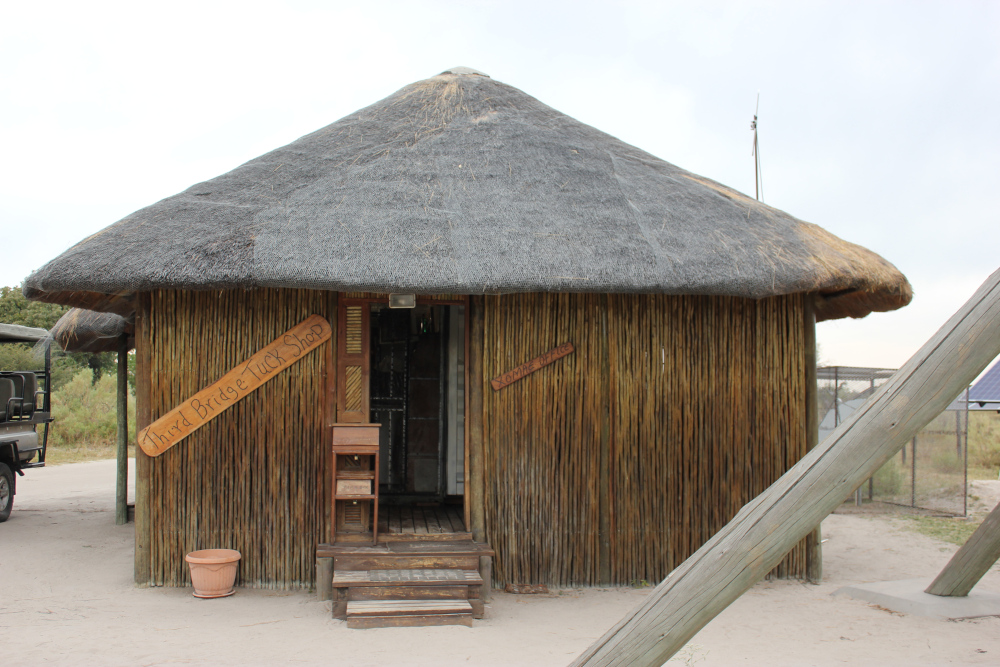
Camping at North Gate
Our route to North Gate led via Xakanaxa and after being on the road for nearly a week, we had our first little hiccup. We did what you’d expect two youngsters behind the wheel of a Toyota Land Cruiser to do. We attempted to cross what we thought was a shallow water crossing in the middle of the Okavango Delta…
After scoping out the 10m-crossing, we concluded it would be a piece of cake. After all, the water came only halfway up the legs of a group of white egrets wading through it. But we didn’t take into account the soft mud and the now close to 4t-vehicle. We were a quarter of the way through the crossing when the Land Cruiser started sinking. The revs went through the roof and a few gulp noises later, the water was at the height of the door. It took mere seconds.
We thought we were in deep trouble but, thanks to Callum’s quick thinking, we narrowly managed to avoid it. He chucked the Cruiser into low 4 and put his foot flat. Soon we found ourselves back on solid land. The only problem: we were on the wrong side of the water crossing, back where we had started.
Given this challenge, we thought it best to reroute and we used the Tracks4Africa maps on our Garmin to take a different road to North Gate. Here we had the two most incredible, wild nights. North Gate has a great selection of campsites and a handful of good-quality ablution blocks scattered between. Our choice – campsite number MK4 – proved to be a lovely, shady stand, as well as a hotspot for the hyenas to come sniff by in the evenings!
Moremi’s wild side
Over the next couple of days, we explored the area around the North Gate campsites. There is a great network of roads on the south side of the Khwai River. We were pleasantly surprised by the abundance of wildlife and had our first lion sighting of the trip. Not to mention incredible elephant and bird sightings in and around the water.
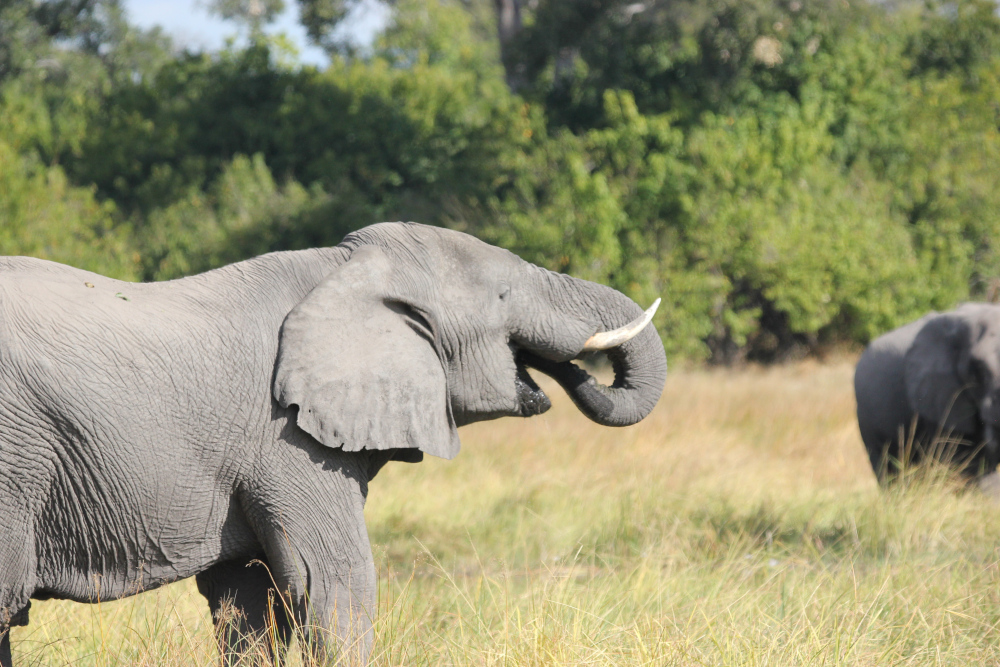
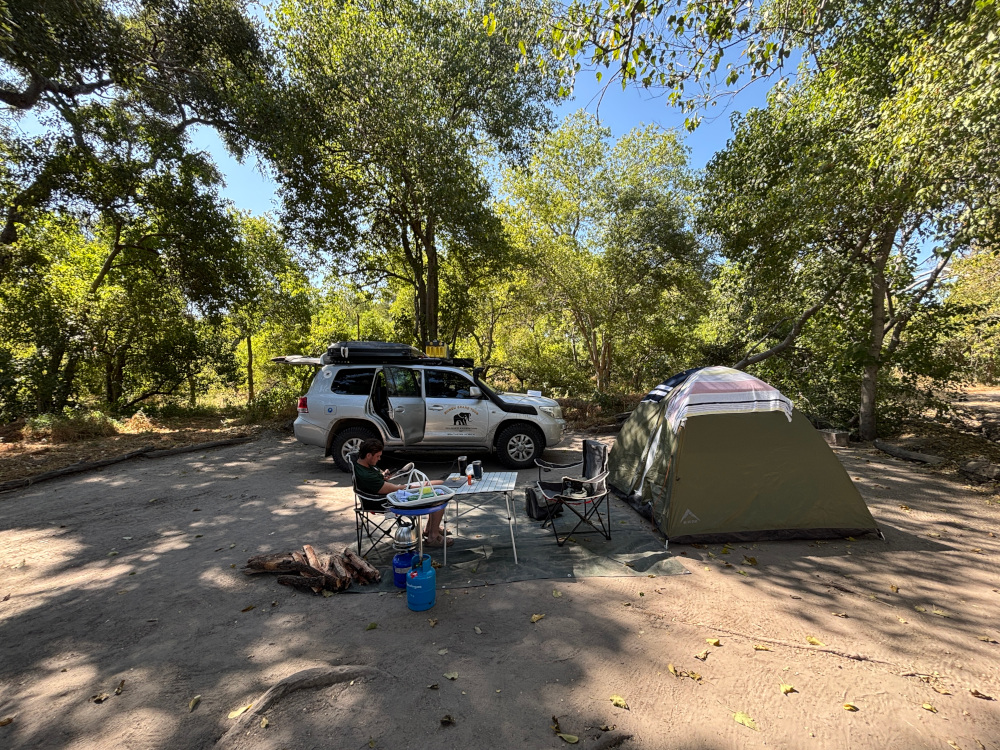
On our final night in Moremi, we were treated to a special moment in the Botswana bushveld. If you have been to the bush before, you know how well sound travels, especially at night. We had lions and hyenas fighting what sounded like a few hundred metres away. It’s a noise that chills you to the bones and was such a surreal experience for us!
The next morning Callum and I were up early to pack up, say our goodbyes to North Gate and head just over an hour east to Magotho. From previous trips, Magotho stood out as our favourite campsite in Southern Africa for how wild it is. This trip cemented its status in that number one spot.
Memorable sightings at Magotho
Magotho in the Khwai Development Trust area is possibly the best birding spot we have yet experienced. The diverse network of roads in and around the river’s edge gives you abundant opportunities to see some awesome things. If you have not been to Magotho before, I would highly recommend it. We were lucky enough to get a riverside campsite where we enjoyed lunches and mid-day Rummikub games, while watching the elephants feeding and bathing no more than 50m away. At Magotho, the campsite covers a large area with the individual stands being more spread apart. As a result, you really get a sense of peace and quiet, and that you are camping by yourself.
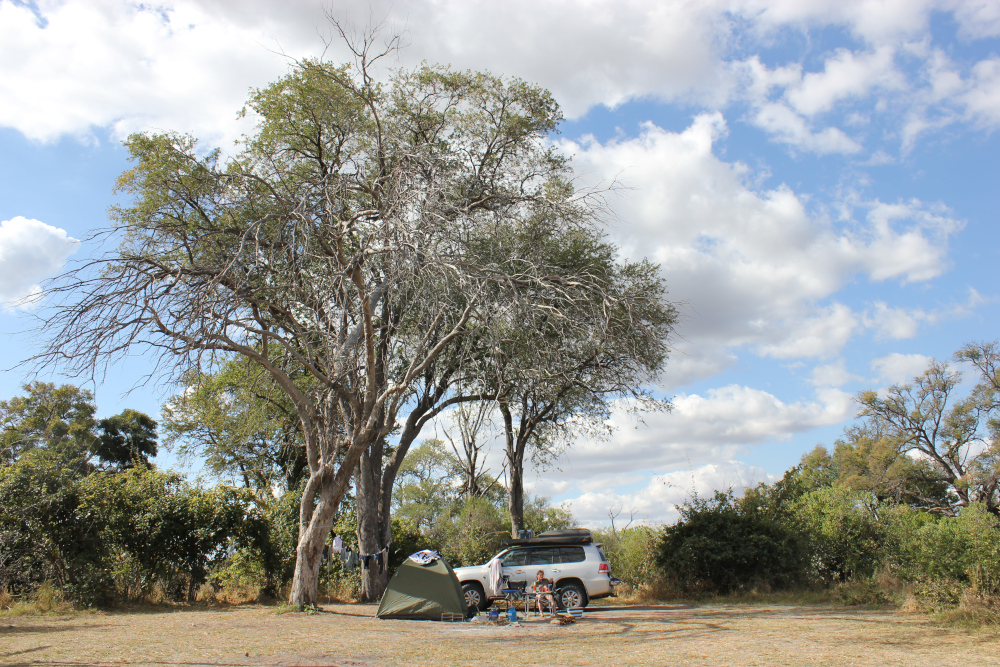
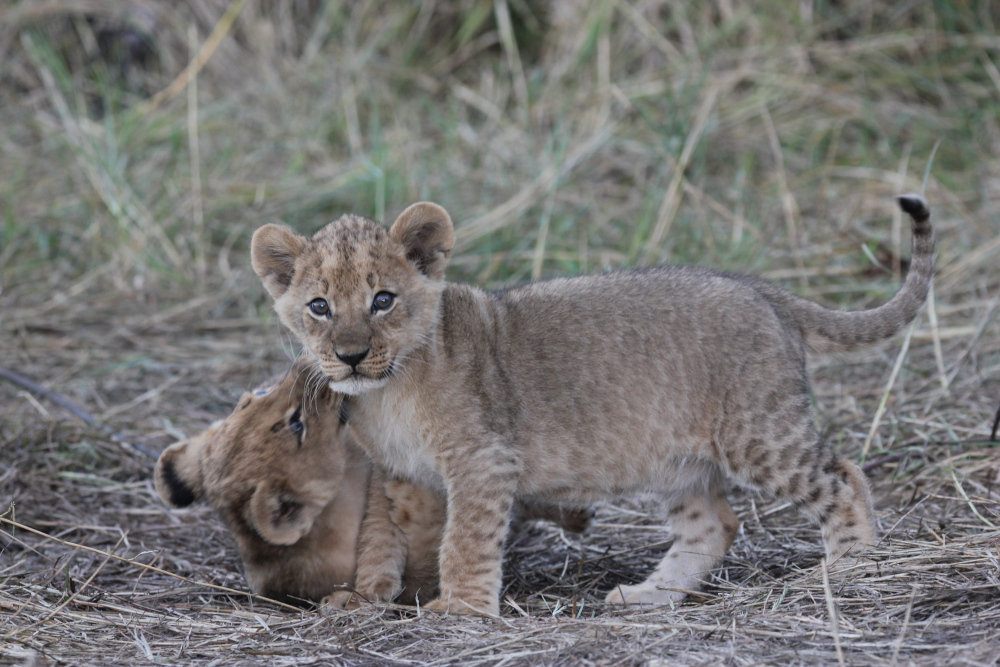
Callum and I knew the area pretty well already and so on both of our afternoon drives we headed to the dead tree forest. We had seen leopards here in the past and hoped to repeat the experience. Unfortunately, this time around we had no such luck but, to make up for it, we had another big cat sighting. On the eastern side of Magotho, between the campsites on the water’s edge, a lioness was denning. She had recently had cubs and we were lucky enough to spend two magical evenings by the den watching the little ones play! We had to pinch ourselves: from the cubs to our campsite was a mere kilometre.
Don’t leave steaks unsupervised
There’s no question that Magotho is a truly wild campsite. By our last night, we had run out of firewood and so decided to make use of our skottel to cook dinner. On the menu for the night were juicy rump steaks. Callum and I were both a bit distracted and lounging in our chairs when suddenly we heard a stomach-churning growl. It seemed to be coming from the riverside road about 20m from where we were camping. The sound made the hairs on our arms stand up straight and caught our full attention.
In the blink of an eye, we were both out our chairs looking frantically in the direction of the growl to see the culprit. But our lights and lanterns weren’t bright enough to light up as far as the road. We felt like sitting ducks not being able to see what was out there. Before we knew it, we had hopped, skipped and launched ourselves into the car that was behind us.
With the flashlight that was in the car, we began scanning the bush to look for what we could only assume was a lion. But we could see nothing, so we waited it out in the car for another 5–10 minutes to make sure everything was clear. Suddenly, the biggest hyena we had ever seen in our lives came trotting along and stole… our braai spice from the table. It left behind what we thought would be the first-choice meal, our steaks, sizzling away on the skottel!
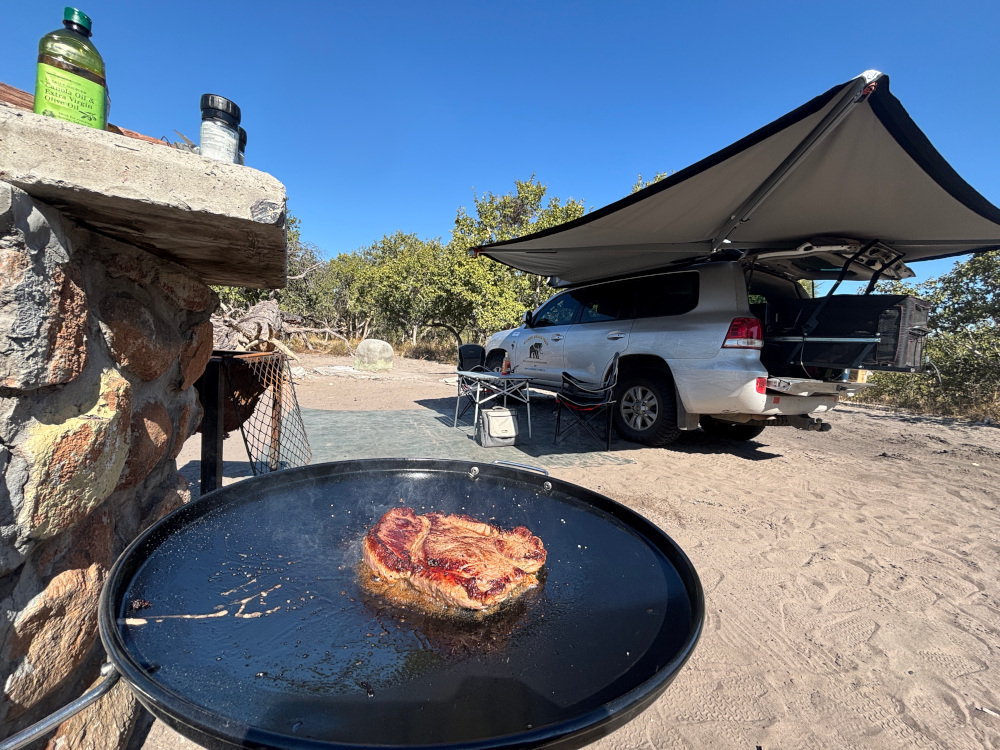
We found out the next morning that we hadn’t been making things up the night before. In fact, a male lion had been patrolling the road that night and was seen by other campers. Gotta have your wits about you when camping in Botswana.
Seeing Khwai from the water
To end off our time at Khwai with a bang, we treated ourselves to a mokoro trip for a couple of hours. If you ever find yourself in and around the Okavango Delta, this is a must! Experiencing the natural beauty from a different perspective such as this is truly a once-in-a-lifetime experience. We booked our trip with a lovely gentleman at the North Gate Reception who called the Hippo Pools Mokoro Trips office for us. $35 per person later we were on the water.
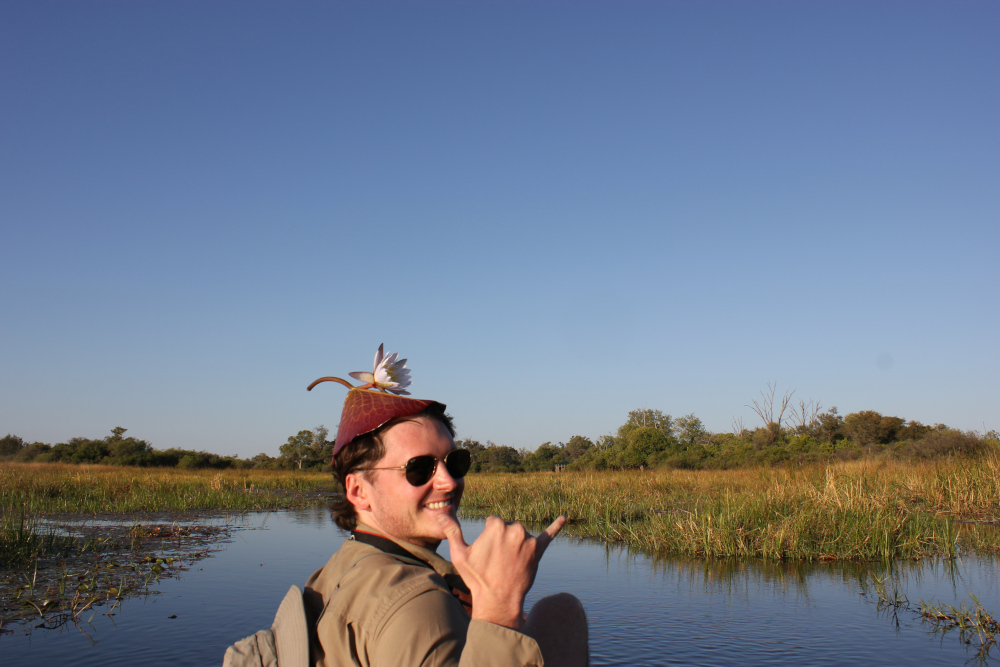
Our awesome guide, Jooh, was so knowledgeable and made this experience even better than we could have imagined. We ended up leaving this mini trip with a profound sense of appreciation for the big, the small and the unique parts of nature. Our cherry on top was a surreal sighting: a couple of wild dogs in the long grass right by the water’s edge. It was pure luck that we stumbled upon them. We followed them down the river for a good 20 minutes before they disappeared into the bushes. It was a sighting we will never forget.
