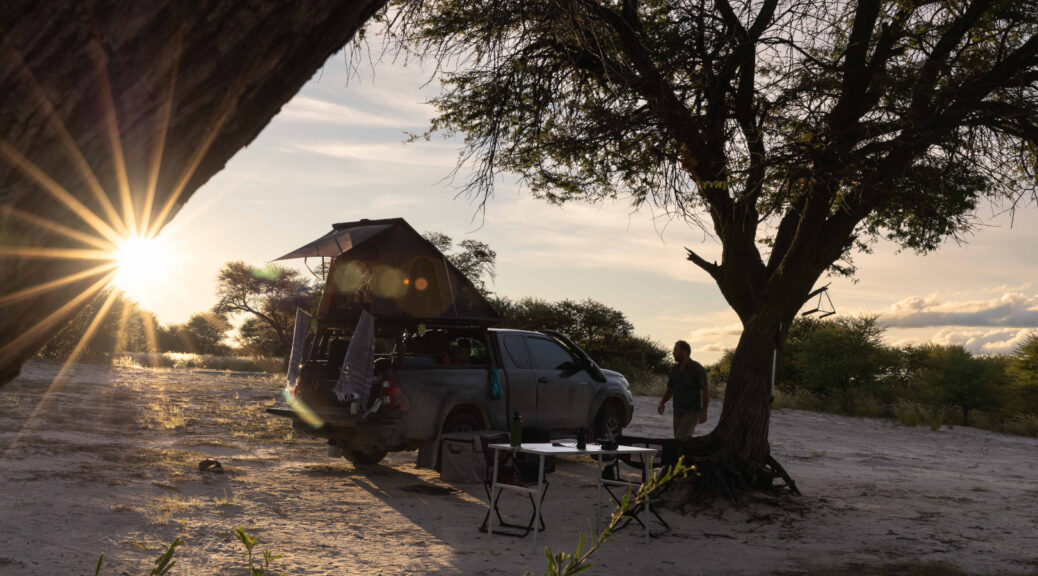
If your ideal campsite consists of a tree and nothing else, you will love Jack’s Pan in Botswana. This is wild camping in the Kalahari. By Mariska Bartlett
Some of the most unforgettable moments seem to be pure fluke. That was the case with our stay at Jack’s Pan Campsite in March this year. We’d had no plans to travel to Botswana, but then war in the Middle East caused the cancellation of my husband’s flights to Europe. With two weeks before his departure, the best replacement flight was from Windhoek to Frankfurt. My motto is to make hay when the sun shines, so why not drive to Windhoek via Botswana rather than flying up? Hubby was hooked and I had 10 days to plan a trip.
The wilder side of the Kalahari
We always try to go to the Botswana side of the Kgalagadi due to the lack of public game viewing roads on the South African side. However, finding space at short notice during the Easter school holidays was near impossible. Then I remembered the KD concessions that lie beyond the Kgalagadi’s border: a vast space stretching to Hukuntsi. This area, which is managed by local communities, has always lured me on a map. There is no real infrastructure, but there is some form of road network. Best of all, there is no fence between the concession and the Kgalagadi Transfrontier Park, hence what you can see there you can see here.
At the time of our trip, the Northern Cape and Botswana had received record rainfall and we knew we were in for a spectacle. The concession is divided into the KD2 and KD12 blocks. Jack’s Pan falls within the KD12 block, which is run by the Koinaphu Trust, with bookings via WhatsApp. The KD2 block is run by the Zutshwa community project, with efficient bookings for Kaa and Name Pan campsites through Wild Botswana Safaris. It took about a week to get my permits. Getting these permits is essential as people have treated the area as a wild west in the past and camped illegally. There are regular patrols and you will be heavily fined if you do not have a permit.
Getting to Jack’s Pan
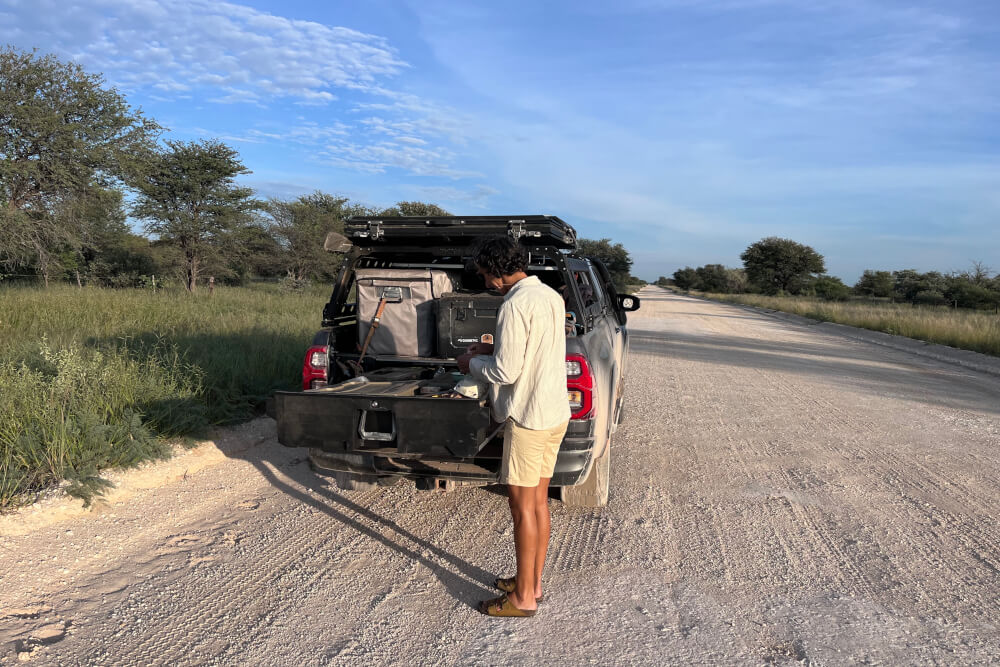
We decided to enter Botswana at McCarthy’s Rest Border Post as this takes you to Tsabong and then the Mabuasehube access road. From there you head straight up to the southeastern corner of the Kgalagadi Park. The road up to the park was fairly good, a wide graded gravel road. Then as you reach the park the deep sand begins. This is slow going all the way until you reach the northeastern corner of the park, passing right by Mabuasehube Gate on the way, where you turn right. You then follow the cutline in some more deep sand until you reach the coordinates to turn into Jack’s Pan. From Tsabong to Jack’s Pan took us about four hours. When we arrived at this vast pan, it was bone dry but with beautiful tall green grass all around it.
Off-grid camping
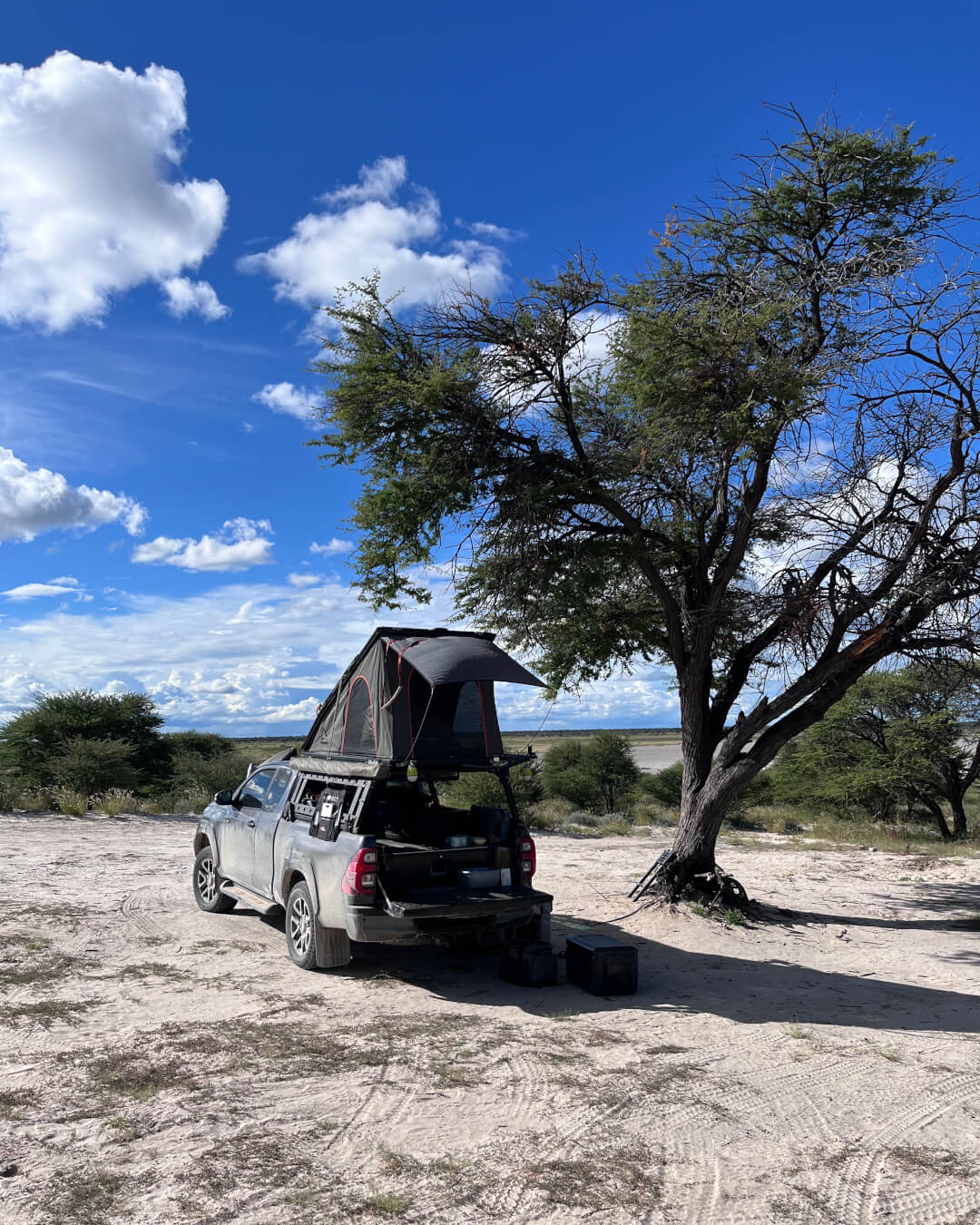
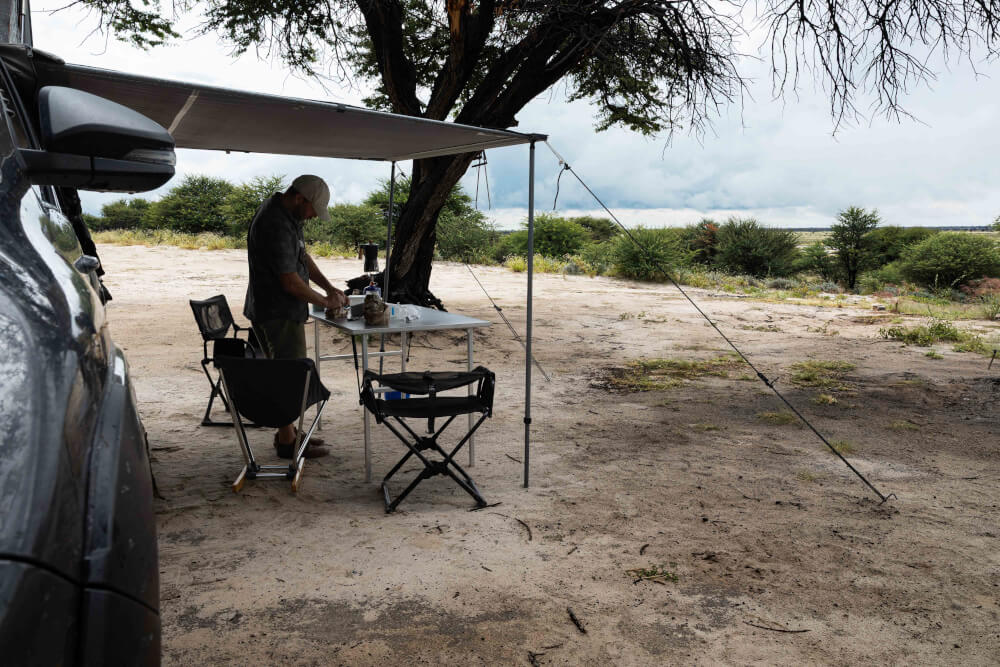
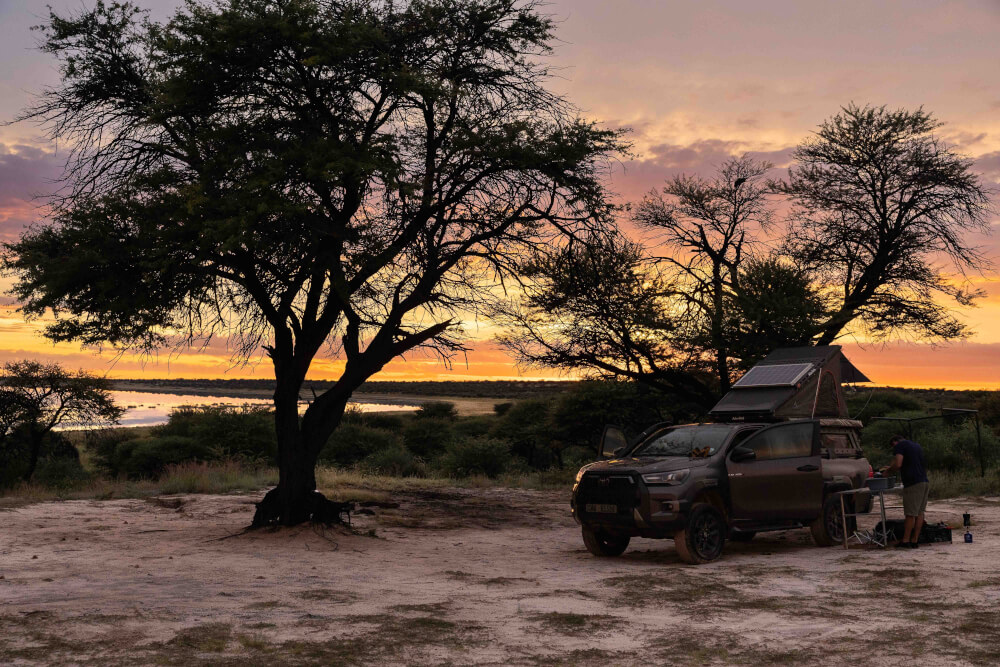
The campsite at Jack’s Pan is our ideal situation: a thorn tree and no other people in sight! At one stage, there was an attempt to establish some form of facilities. I was too scared to go into the long drop toilet and a fallen over tank stand with torn shade netting was all that remained of the bathroom. I would say rather leave these things all together if they are not going to be serviced regularly since they detract more than add to one’s experience. And, please, dear readers, remember the golden rule at these wild campsites. Do your business far away from camp, dig a hole and burn your toilet paper! It is a myth that toilet paper is biodegradable. Maybe by the time your great grandchildren go there and then they might not see any animals because they had all choked on TP.
We settled in for the afternoon, setting up camp and making some lunch. There were lots of gemsbok and springbok on the pan and I was excited to get my camera ready for our afternoon drive. There is a lovely two-spoor road right around Jack’s Pan which offers the best game viewing. That leads to my second reminder. Just because there is a road on your GPS map that leads onto the pan doesn’t mean you have to go there! It means some misguided overlander drove onto the pan and their track was logged on the maps since users contribute to Tracks4Africa. Use your common sense and don’t do it. Again, think of those grandchildren. Would they want to get there and see a pan full of vehicle tracks? Due to the sensitivity of these ecosystems, those tracks stay there for decades. So, let’s be more conscious overlanders.
Tracks4Africa says
To prevent other travellers from driving onto the sensitive parts of Jack’s Pan, the tracks will be adjusted in future maps. Please notify us of corrections by submitting your data.
A summer thunderstorm
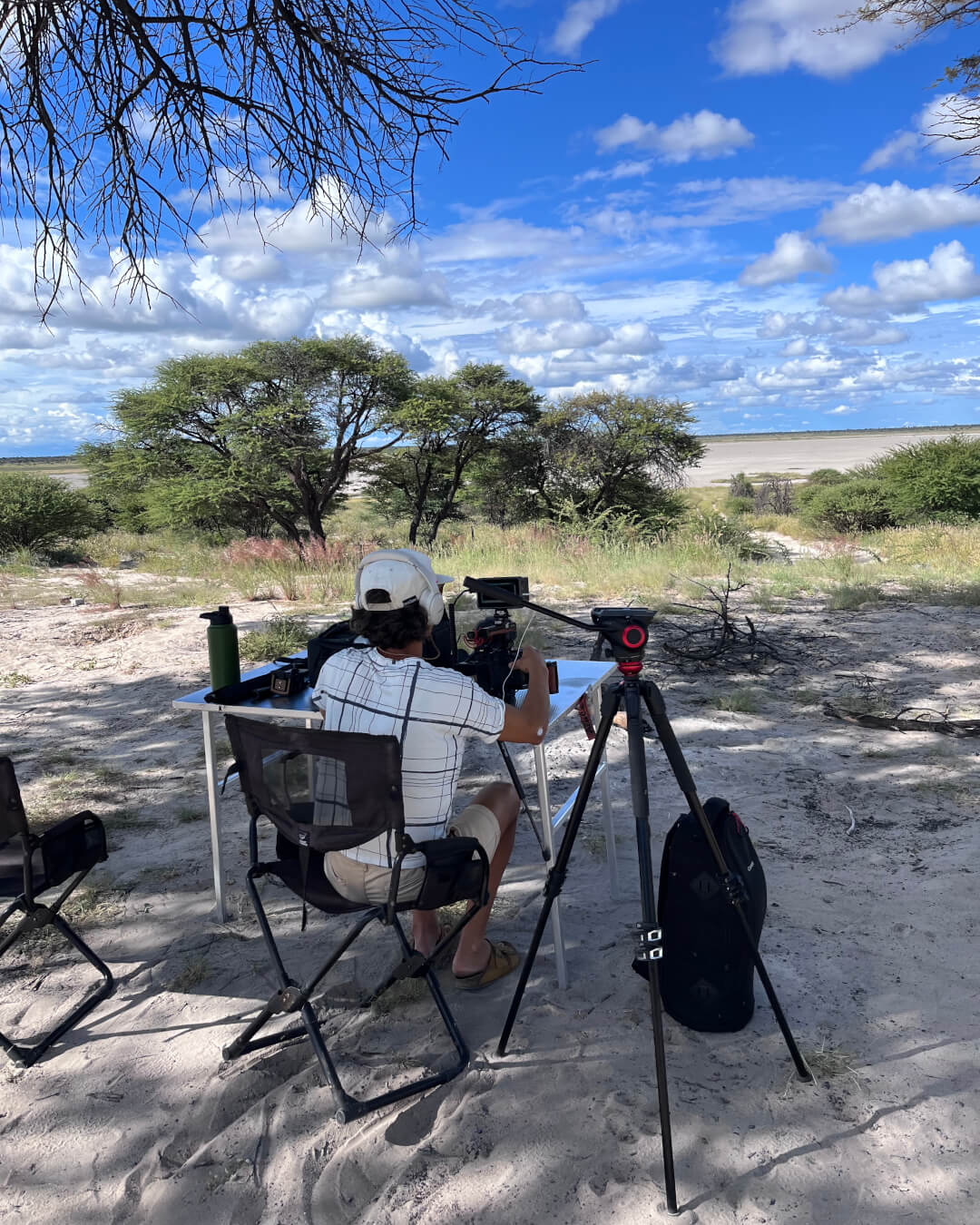
The afternoon game drive was lovely and we had a quiet, restful night of sleep. The next day we fell into camp routine with a pre-sunrise coffee and rusk followed by a game drive. Back at camp we cooked our brunch over the fire and then relaxed for the day until the afternoon drive. I walked down to the pan as it is only about 50m from camp and sat there with my camera to see if I could see any action.
That afternoon as we drove around the pan we could see thick, dark clouds building in the north. Little did we know what awaited us that night. As we were braaiing that evening, we could see the storm was getting closer. We showered quickly after supper and climbed into the tent. Not a moment too soon. We could count the intervals between each lightning bolt and the thunder that followed getting shorter and shorter. Then it started to pour down rain. This violent wind came up that shook the whole bakkie and us on top.
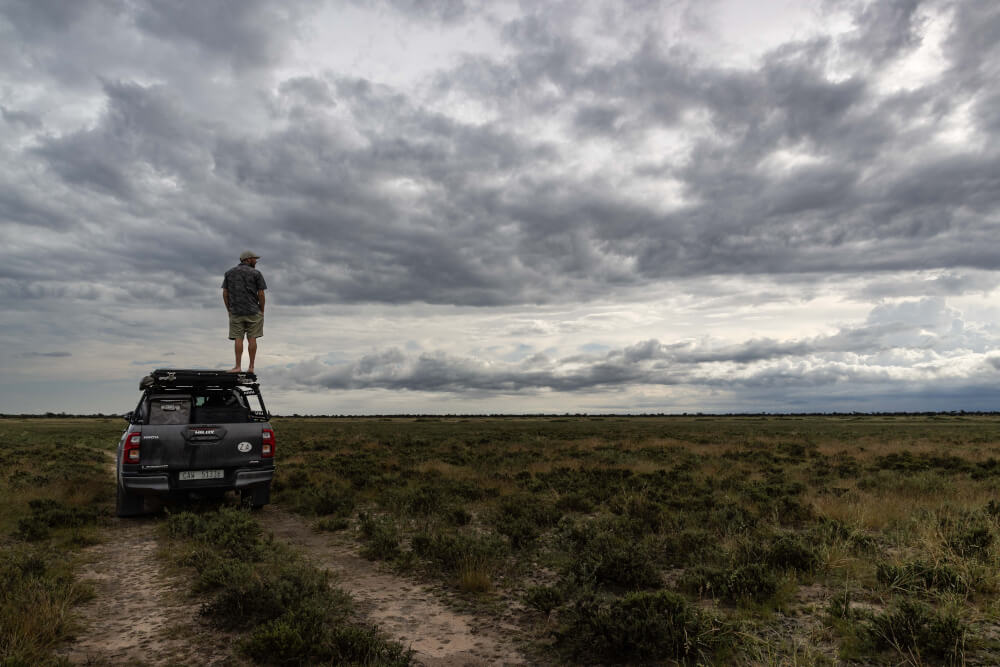
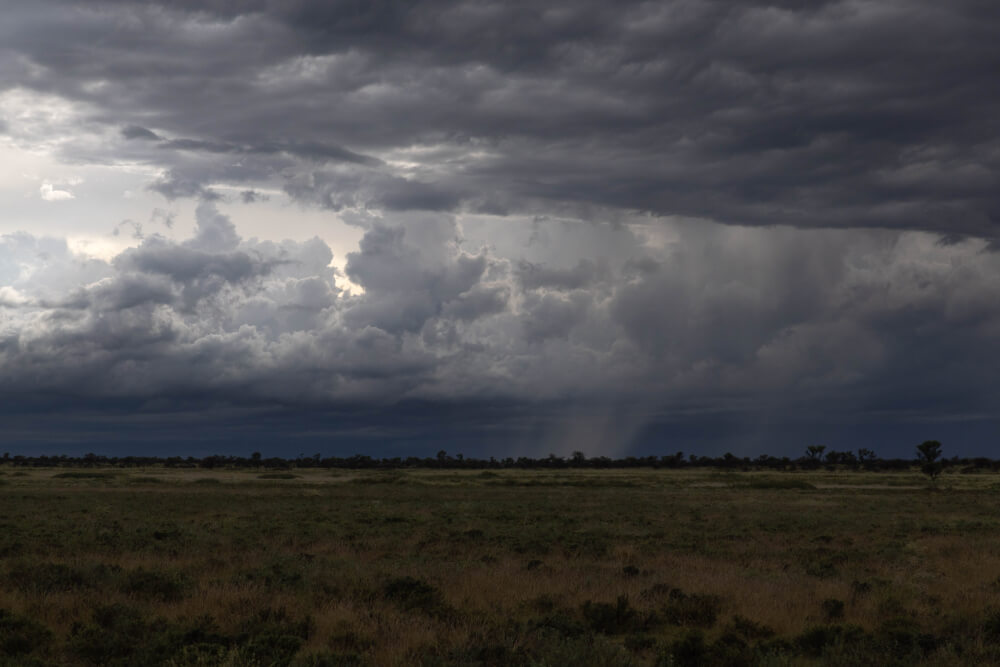
Now I am not a fan of thunder. I grew up in a platdak house on the Highveld and those storms put the fear of death in me. Hubby on the other hand always find storms exciting. But that night even he had a pale look on his face. It felt as if the one lightning bolt struck right next to our tent. I figured the next one would be on us and then I would be dead so I might as well go to sleep. Luckily, as with most Highveld storms, these Kalahari storms are quick and as soon as it came, it went. The rest of the night was peaceful but with a lot of rain.
Morning after the storm
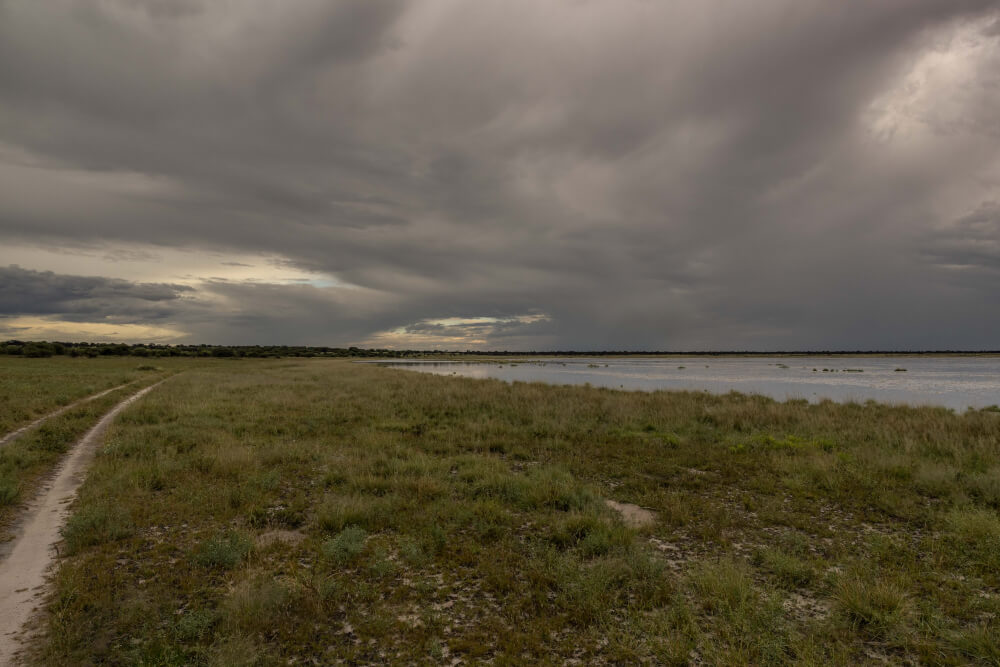
I woke up early the next morning and was curious to see what the pan looked like. I wasn’t prepared for what I saw. I’d thought there might be some puddles that would make for nice photos. But the pan was full! The whole pan was covered in about a foot of water. It was magnificent. The sun came up blood red.
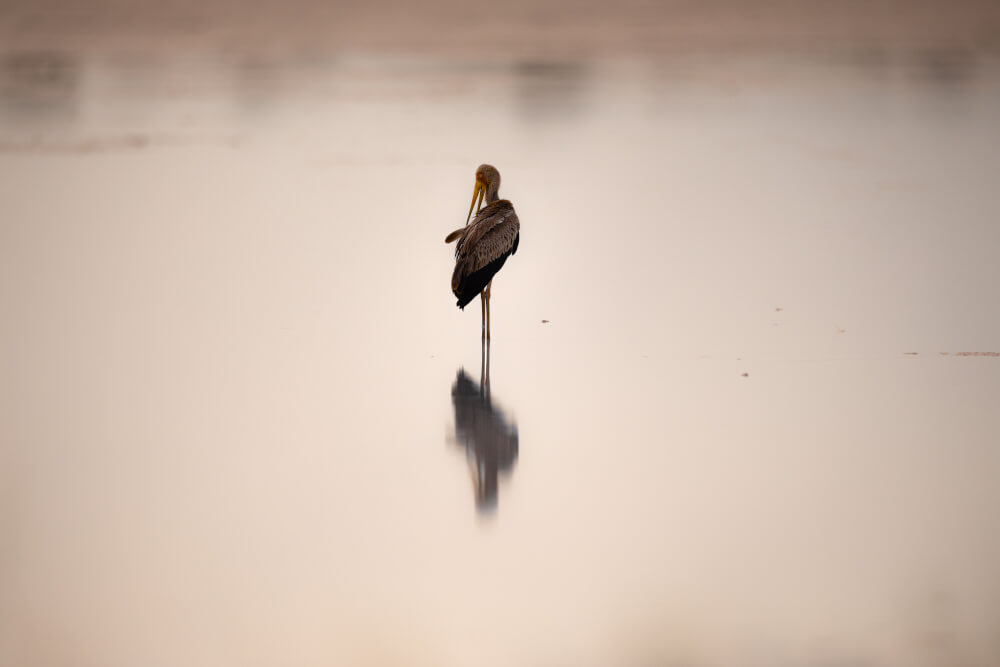
On our morning drive we were splashing through water on the two-spoor track around the pan. All of a sudden there were birds! How did they know? A nimmersat (yellow-billed stork) and a secretary pair. Many bat-eared fox families were huddling in the grass, ears flat, trying to get dry. The Kalahari in all her splendour.
We had lots of work ahead of us for the day to dry everything out. The tent had stayed dry, which was amazing, but because we have an open canopy frame, everything else was soaked. But there’s nothing like the African sun in March and by midday everything was dry.
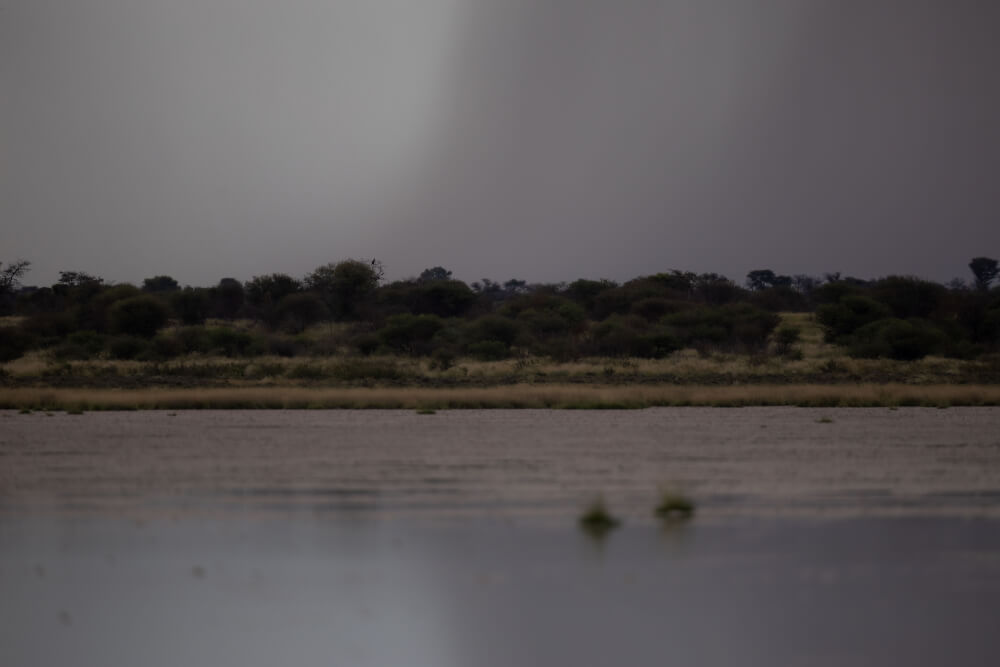
We saw the clouds building again in the afternoon but this time much further away. Like real amateurs we didn’t think much of it. By the time we reached the other side of the pan on our afternoon drive, the storm had caught up with us. We increased our speed from 15km/h to 25km/h, realising we had better get back to camp. We wanted to set up our tent quickly and get some food in our bellies. Too late. The storm overtook us and by the time we got to camp, it was already in full swing. I stayed in the car and hubby scurried around to try and salvage some stuff. We then waited it out in the car. As with the previous night, it was over in about an hour.
A stormy sequel
We managed to make some supper, have a quick shower and climb into the tent. That was the baby storm. The mother was on her way. If we had thought the previous night was rough, we were mistaken. I was convinced the tent was going to be plucked off the car, the car swept up like in some tornado movie and we were going to end up in some thorn tree. I don’t think we slept much. But once again the next morning dawned calm with a deep red sunrise like we’d never experienced before. It was magical and, yes, we were happy to be alive. There were even more birds that day and when we left, the pan looked like a dam.
Would I go again during that time of the year? If you’d asked me the next day, it would’ve been a definite no, but time heals most things and the spectacle of it makes up for the fear. I was anyway far more scared a week later when three elephant bulls were grazing around us in the middle of a full moon night. It was at that point that I realised I had left some naartjies in the cooler box right below our tent. But that’s a story for another day.
Good to know
The KD2 concession is only open in the summer months; in winter it is used for hunting. Jack’s Pan lies within the KD12 concession and is open year-round.
Camping at Jack’s Pan costs P80 per person, P30 per vehicle. Entry to the concession is P40 per person. Jack’s Pan bookings: Priscilla on +267 72 312 594
KD2 bookings: info@wildbotswanasafaris.com
Travel Botswana with confidence

The Botswana Self-Drive Guide covers all the essentials for an overlanding trip: where to go, refuel, get supplies, overnight and get help in an emergency. With accommodation listings and maps, it’s perfect for trip planning. What’s more, it’s packed with travel advice ranging from vehicle preparation to dealing with vet fences. Combine the guide into a travel bundle with the Botswana map or another guidebook and you’ll save.
About the overlander
Travelling to untamed places is a way of life for Mariska Bartlett. Together with her sister, Nerise, she operates Safari Susters, leading photographic safaris across Africa. To see where she travels, follow @safarisusters on Instagram.
