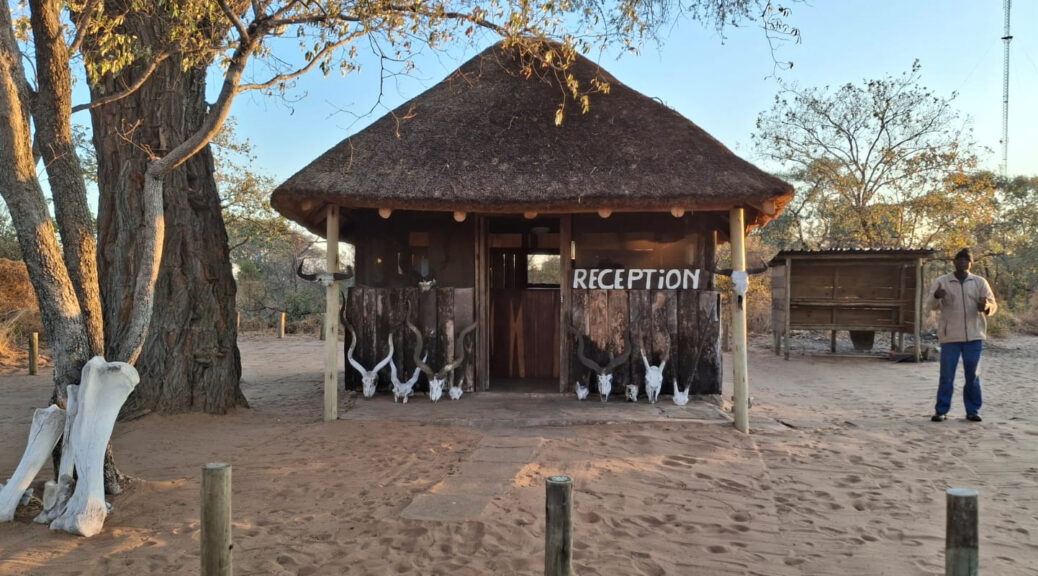
Three years ago I had never heard of Namibia’s Khaudum National Park. Now I know it is one of the best places where I have ever camped. By Leon Lombard
Not many people know about Khaudum National Park. Even fewer have visited it. Situated in the northeast of Namibia on the border with Botswana and to the southwest of the Zambezi region (Caprivi Strip), it is isolated and remote. In these parts, you’re more likely to come across elephants than people – the closest town, Tsumkwe, was home to just 500 residents in 2012. Khaudum is a place where endangered species such as roan antelope and African wild dog find a refuge. This is proper wilderness, with almost no fences and very little tourist infrastructure. It is Namibia’s only park to protect Kalahari Sandveld, an ecosystem of woodland and savannah, with large clay pans and ephemeral rivers.
In 2023, a friend returned from Khaudum full of praise for the park’s driving conditions, campsites and waterholes. After doing a map reconnaissance, I decided to go, so in August 2025, our convoy of three Toyota Hilux bakkies set off.
Strictly for adventurers
Due to the park’s isolation and limited tourist facilities, visitors have to be self-sufficient and thoroughly prepared for wilderness travel. Authorities recommend travelling as a minimum of two vehicles, with three days’ provisions and 100L of water. The closest fuel stops are in Tsumkwe (52km from Sikereti Camp in the south) and Divundu (150km from Khaudum Camp in the north). Fortunately, all our vehicles have long-range fuel tanks and I also carried four Jerry cans ‘just in case’. Aside from additional 80L-water tanks on our bakkies, we travelled with two off-road caravans that held another 120L of water each.
The road north through Botswana, especially past Sehithwa, is riddled with potholes, so travelling was slow. Things improved once we crossed over into Namibia at Dobe Border Post – the country’s gravel roads are well maintained. But what we were really looking forward to was the sandy two-spoor tracks leading through Khaudum National Park.
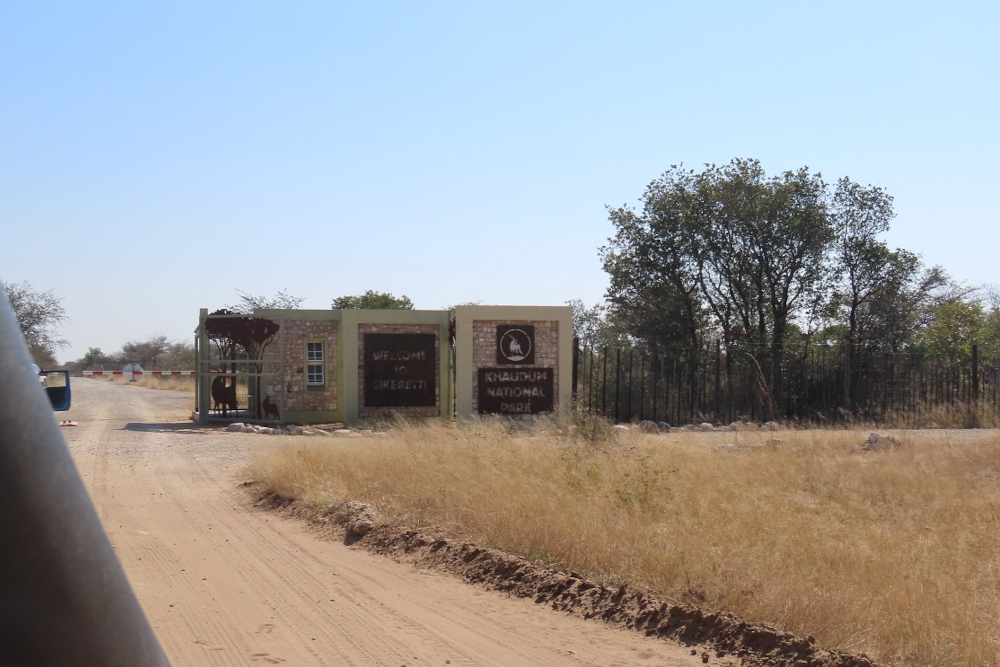
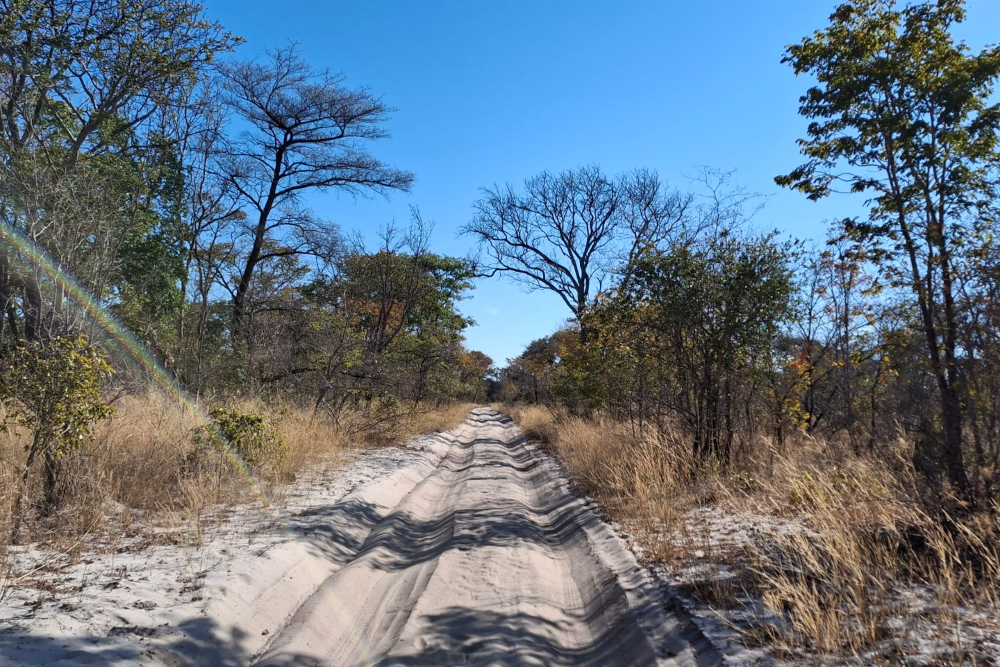
The basic sand driving rules apply: let down your tyre pressure, engage 4WD and drive the vehicle in manual. Initially, our tyre pressure was too high (1.5 bar). Once we let the pressure down to 1.1, the going was better. Although we all got stuck once or twice, we managed to get going again with our sand boards. There are some rocky sections where you should be careful since low tyre pressure and driving over rocks can be a bad combination.
Exploring from Sikereti Camp
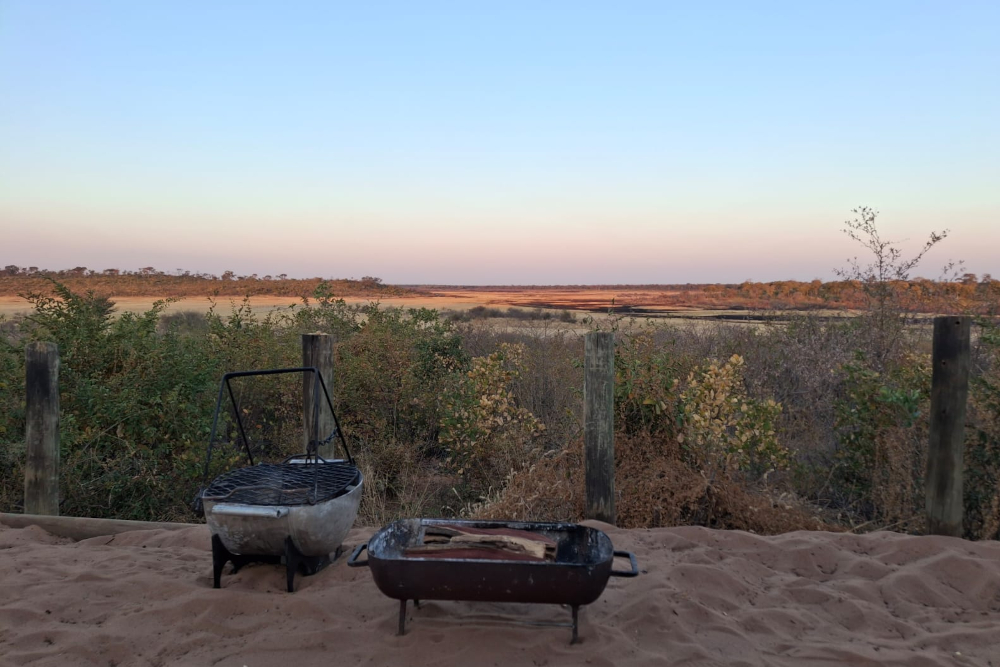
Our first destination was Sikereti Camp, appealingly nestled among trees. Sikereti was thoroughly revamped in 2022 with the addition of a tented camp and central guest area featuring pool and restaurant. Supper can be booked here, albeit expensive at R700pp. There are just four campsites, situated around 50-100m from one another for privacy. Each campsite has its own braai (BBQ) drum, washing-up area and ablutions with hot-water shower. When we visited, the electrical plugs weren’t working – thankfully, our bush caravans have solar panels and proper LifePO4 batteries.
During our stay at Sikereti, we explored the southern and southeastern parts of the park. Mostly we spent our time at one of the waterholes along the course of the usually dry Nhoma River. Some of these have shaded viewing platforms where you can sit and watch the animals that come to drink. There are secondary roads if you want to spend your time exploring, but we didn’t find them as productive. They are also rather overgrown, so your vehicle could come away with quite a few scratches.
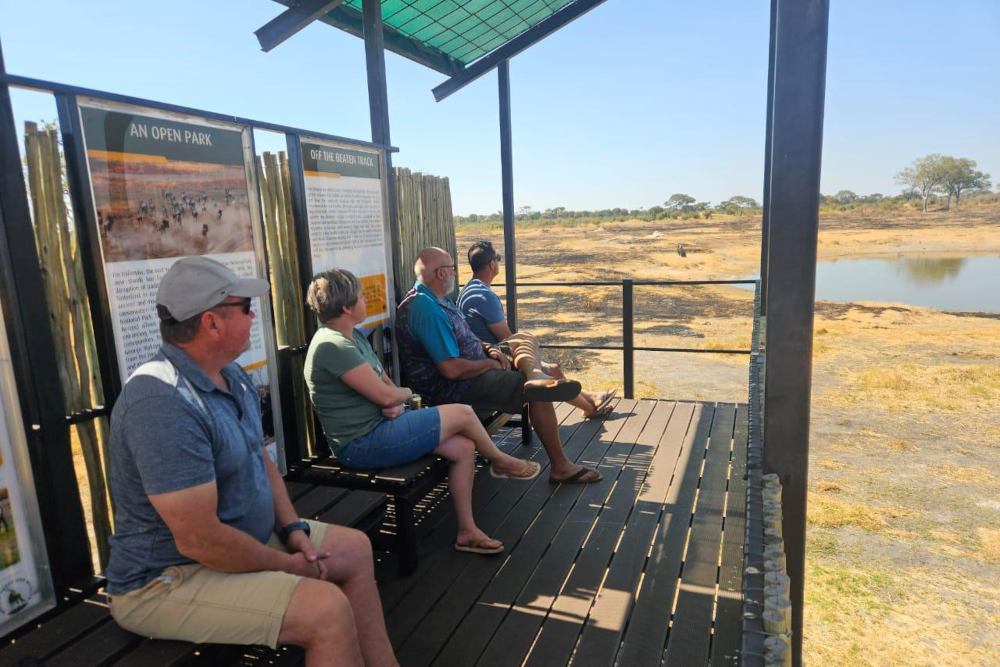
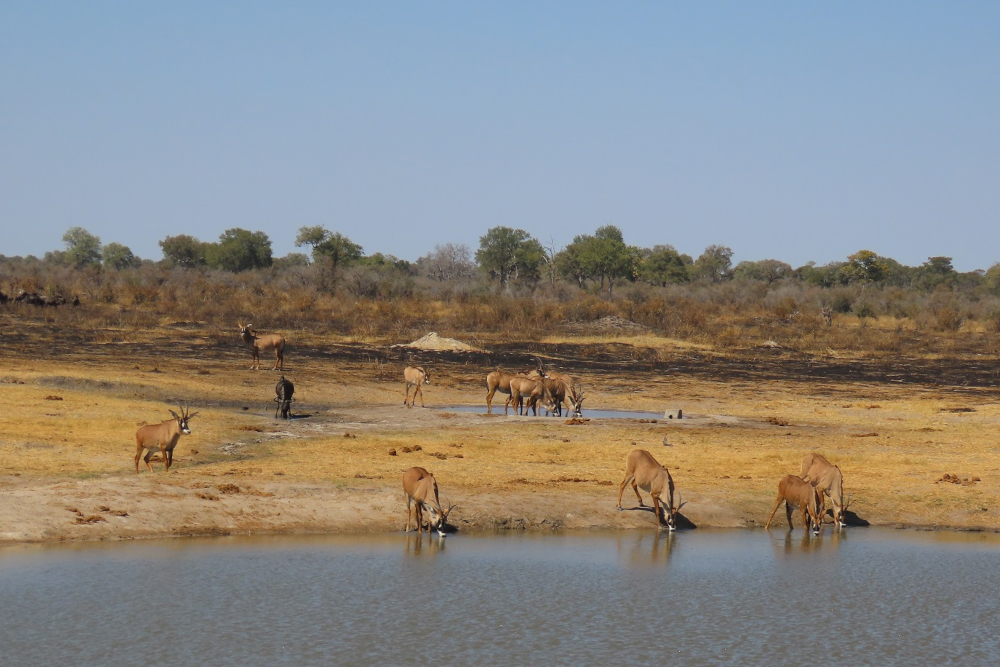
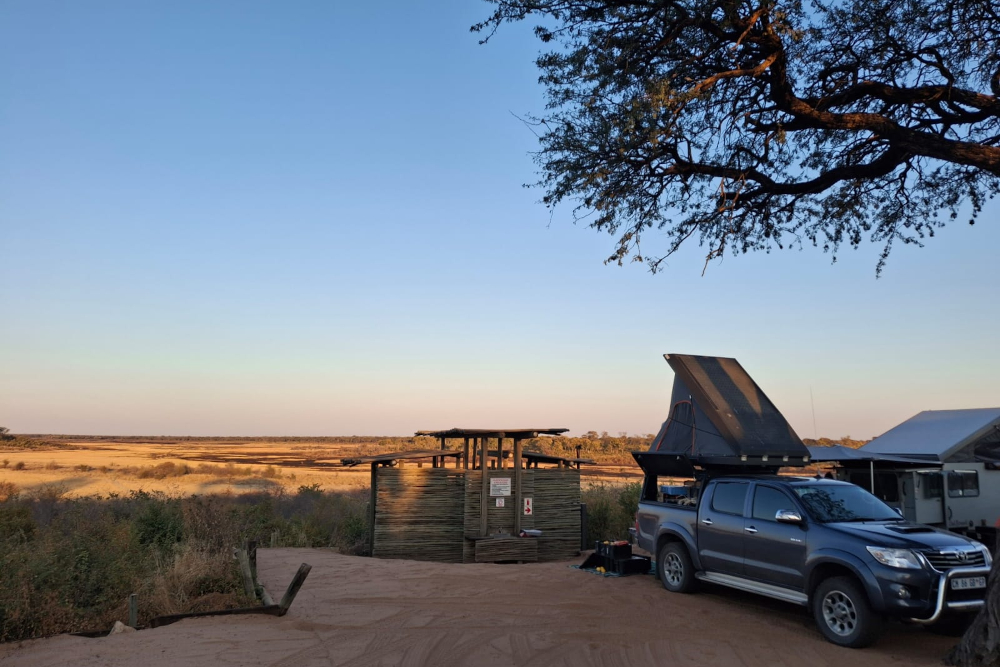
Khaudum’s campsite with a view
After four days at Sikereti, we headed north to Khaudum Camp. The drive took us about six hours, but we were in no rush and stopped off along the way. At Dussi waterhole, a good spot for a picnic lunch, we came across three rangers. They were the first new people we had seen since arriving in the park.
If anything, Khaudum Camp is even more isolated and rustic than Sikereti. We loved it. Reception consists of a thatched roof, covered on three sides, nothing else. There is no shop for buying drinks or ice, and definitely no wifi or cellphone signal. But we had everything we needed. The ablutions are adequate with hot water provided thanks to a donkey – wood supplied. Our campsite was an elevated sand platform overlooking the dry riverbed and a distant waterhole. This could be the best campsite I’ve ever occupied. Sitting in our camping chairs we could watch the comings and goings in the riverbed: kudu, roan, gemsbok and warthog.
Alone among elephants
From Khaudum Camp we explored the park to the east and then south as far as the Doringstraat waterhole. Here, we had an experience that stands out as the highlight of the trip. When we arrived at Doringstraat, all was deserted, so we decided to have a picnic lunch. While we were sitting at the viewing platform, elephants started arriving from all four directions. Eventually we counted around 75 of these magnificent animals. It was fascinating to see how the herds would wait for one group to drink their fill and depart before the next herd took their turn. Meanwhile, as the little ones were fooling around, the majestic bulls went their merry way, not too bothered with the herds.
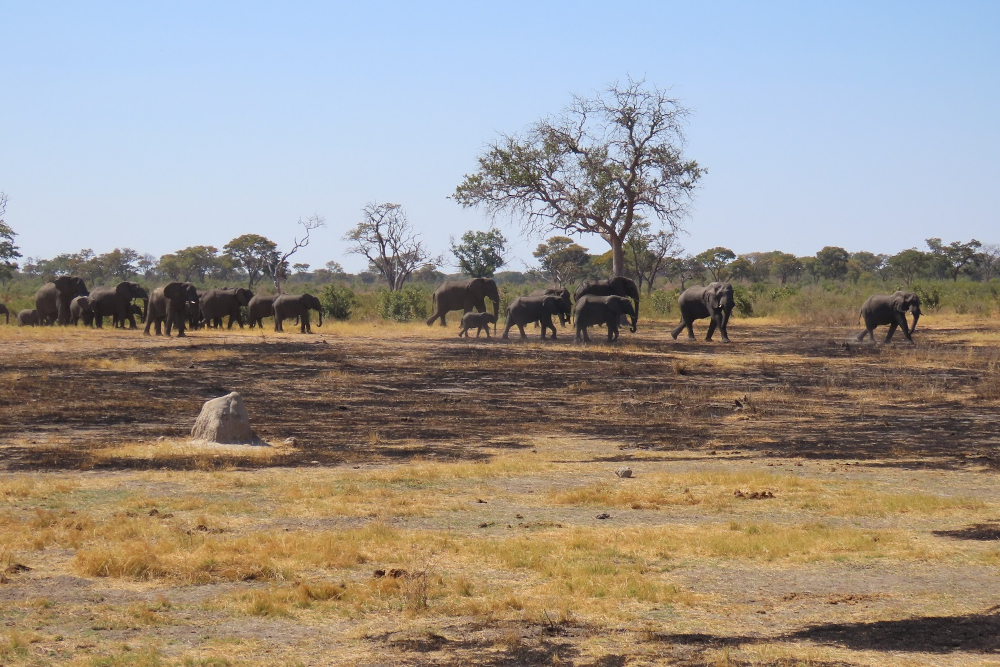
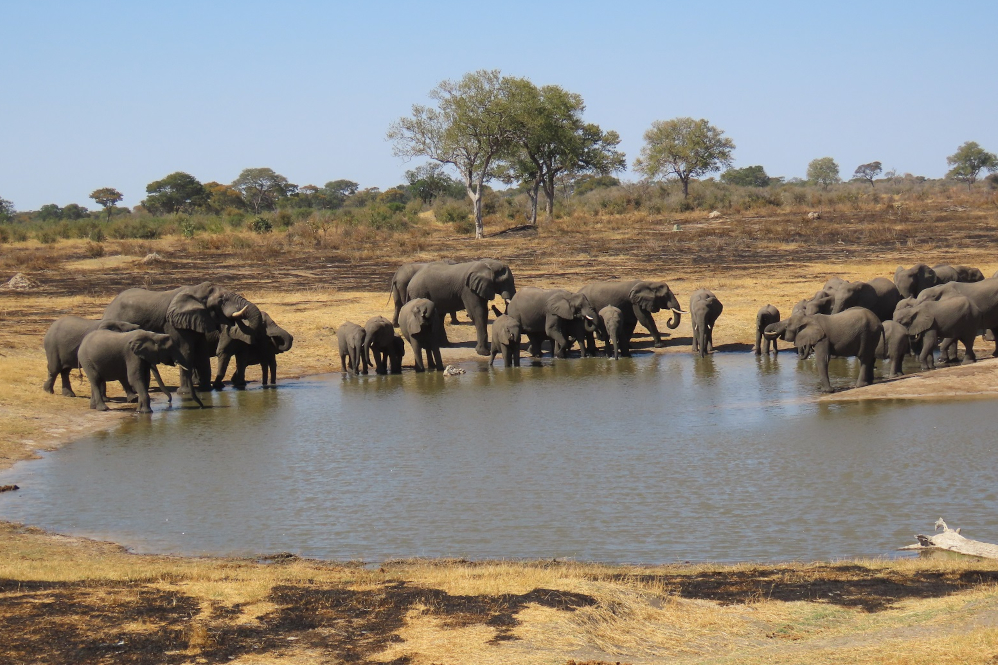
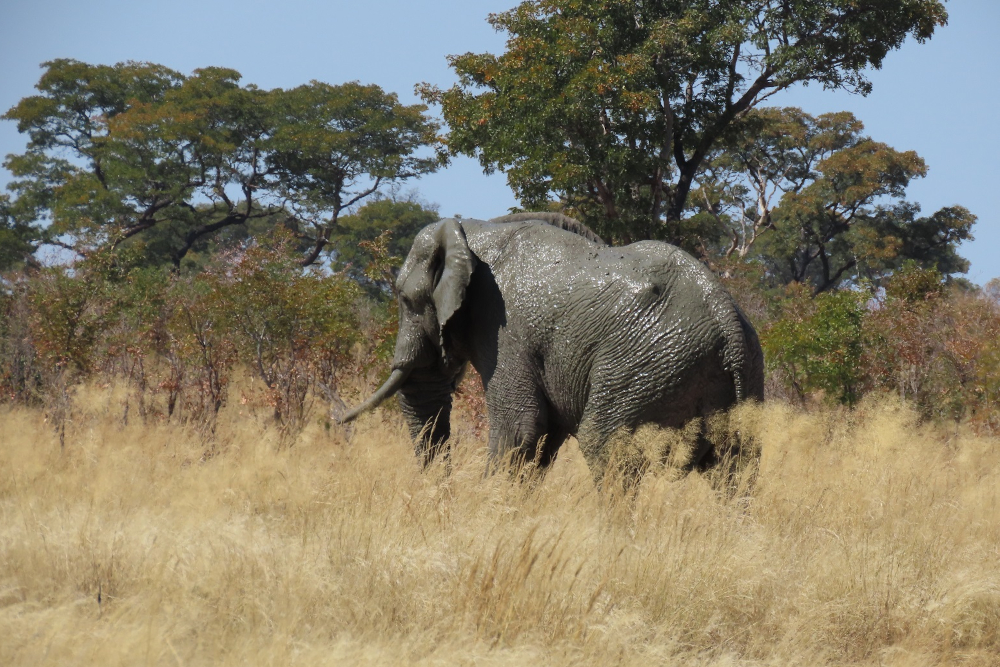
Visitors to Khaudum can expect to see lots of elephants. Tracks4Africa cautions travellers to be prepared to come across elephants unexpectedly as the roads are quite windy and lead through dense woodland. There may also be broken branches on the track, a hazard for tyres or an obstacle that requires careful manoeuvring. Fortunately, these weren’t issues for us, although on the morning we entered, we did see one visitor in a Jimny who wasn’t so lucky. He suddenly found himself in the midst of an elephant herd. I put this down to inexperience on his side and not knowing when it’s safe to stop for pictures and when not.
After a week in the park, we exited north to join the B8 towards Katimo Mulilo as we were heading for Chobe. The 70km or so to the main road took us the better part of four hours. We probably left a little too late since from around 10:00 the sand was really loose and the going tough.
A lost paradise
Khaudum’s isolation is what attracted me in the first place and I was not disappointed. It is properly off the beaten track and you should be prepared to spend your time in solitude. Aside from the people we saw on the first day and the rangers we came across, we didn’t see anybody else. This is a destination for couples or friends who are 100% at ease with one another. If you don’t feel the need to break the quiet and you’re happy simply soaking up the atmosphere, you will enjoy Khaudum. Away from cellphones, the office and the trappings of the rat race, you can rest and rest well. It really is a lost paradise.
Good to know
- A 4×4 is essential for visiting Khaudum National Park. Initially, I drove in auto, but within 30 minutes received a high temperature warning on the transmission, so went back to manual.
- The park’s deep sand tracks will make a big difference to your fuel consumption. I recorded an all-time low of 1.3km/L when exiting the park with my caravan in tow.
- There is no fresh produce available in Khaudum or the surrounding villages. You can pre-order beef – and, if long enough in advance, other meat – through Tsumkwe Country Lodge.
- There is no signal in the park. Take a satellite phone or an InReach Mini if staying in touch is crucial.
- Everywhere we stayed, fresh water was available on tap.
- We spent seven nights in Khaudum National Park. If you are comfortable sitting around and don’t want to do drives on different roads every day, you could stay longer. For my next visit, I will probably book longer at Khaudum Camp and fewer nights at Sikereti.
- The roads along the dry riverbeds are interesting as the animals gather there and around the waterholes. Park off at a waterhole and wait for things to happen.
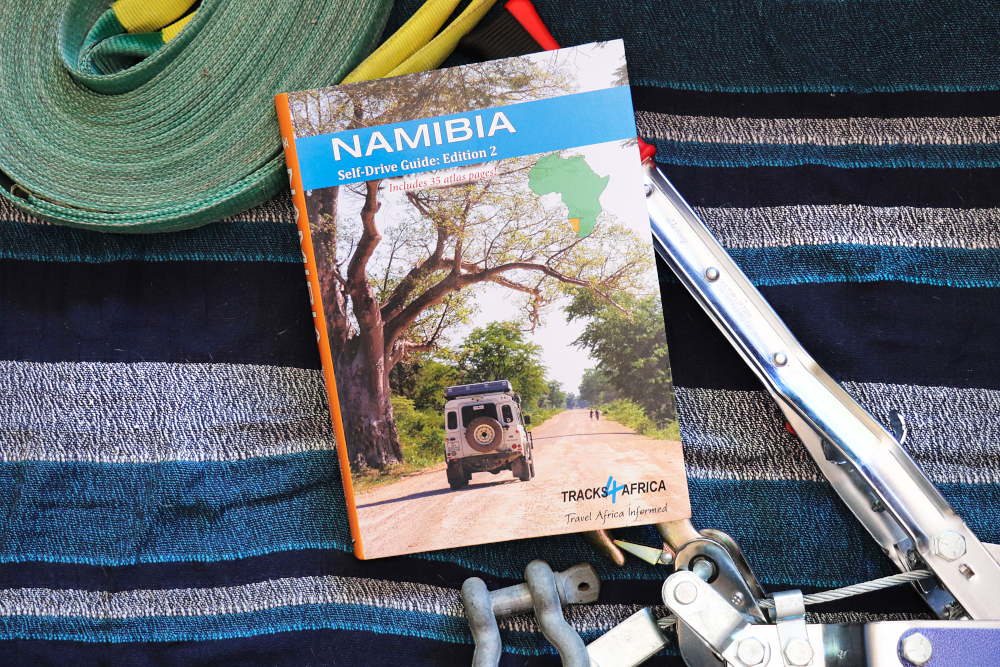
Got a trip to Namibia in your sights? Our Namibia Self-Drive Guide offers valuable information on destinations, even for little-explored places such as Khaudum. You’ll find listings of places to stay, detailed maps, overlander tips, border nitty-gritty and more.

Wow, Sikereti looks like Disneyland now. In 2019, it was a free wildcamp, so it was only 50NAD park fees. 1000+ per day is nuts. The elephants were amazing though…
The writer neglected to mention the camping cost. At R740 per person per night plus a once off R380 vehicle charge it is rather expensive. Coupled with the current diesel price it is still a bucket list trip, but a different bucket.
SADC visitors pay R440 a night, which is similar to fees in other national parks (Etosha or Kruger).
Well written and inspiring! Thank you! I have wanted to visit for nearly twenty years, having driven by en route to other places. It needs time! Not a quick in and out. 7 days makes sense. I will now plan it properly and make the time!!
on our list!!! great article