
Adventure bikers will find plenty to enjoy on this day trip from Johannesburg, says Willem Rudolph. Picture good gravel roads, rolling farmland and, of course, silos. Plus the Seven Silos Dirt Ride is a chance to tick off challenges for the Turkana Challenge 2025.
I like getting out of Johannesburg and onto a dirt road as soon as I can. My idea of relaxation is getting away from any kind of human environment. So with this ride, I started my planning by doing what I always do: looking at the Tracks4Africa map. Because the tracks are coloured according to the type of surface, it’s easy to identify the gravel roads. And in South Africa we’re spoiled for choice: the gravel roads create a spider’s web of route options.

I had in mind heading southeast of Johannesburg, to where the provinces of Gauteng, Mpumalanga and the Free State all come together. This is an area I think of as the Upper Battlefields region, just before you get to the storied battlefields of KwaZulu-Natal. Here there are places like Val, the hamlet known as the smallest town in South Africa. Another place that’s been on my radar for a while is Excelsior Guest Farm, some 40km south of Standerton. It’s perched on a ridge with the countryside spread out before it.
Soon I had a route on gravel roads plotted from Johannesburg to the farm. When I looked at the map closely, I noticed there were several silos along the route. And so the Seven Silos Dirt Ride was born.
Beginning at the blockhouse
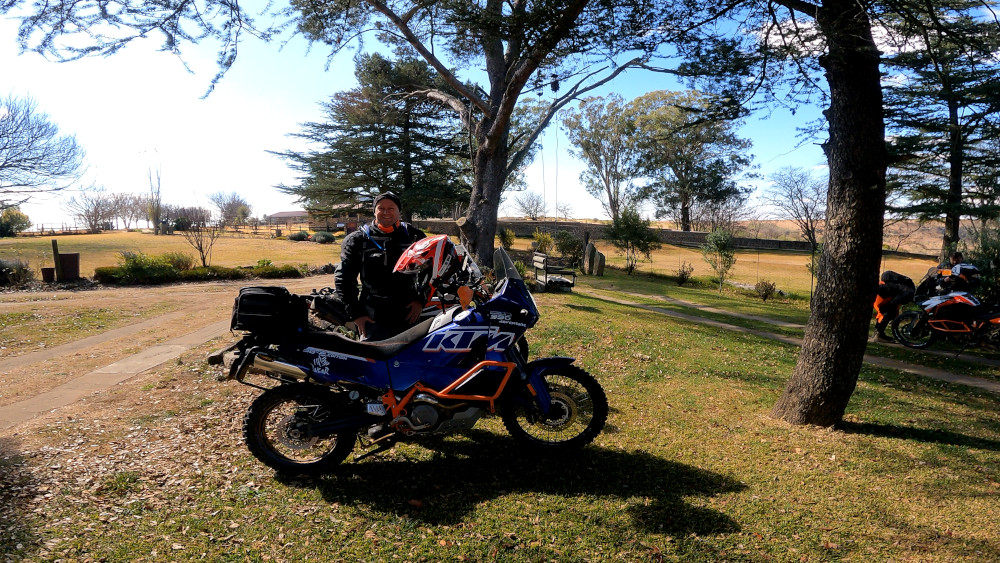
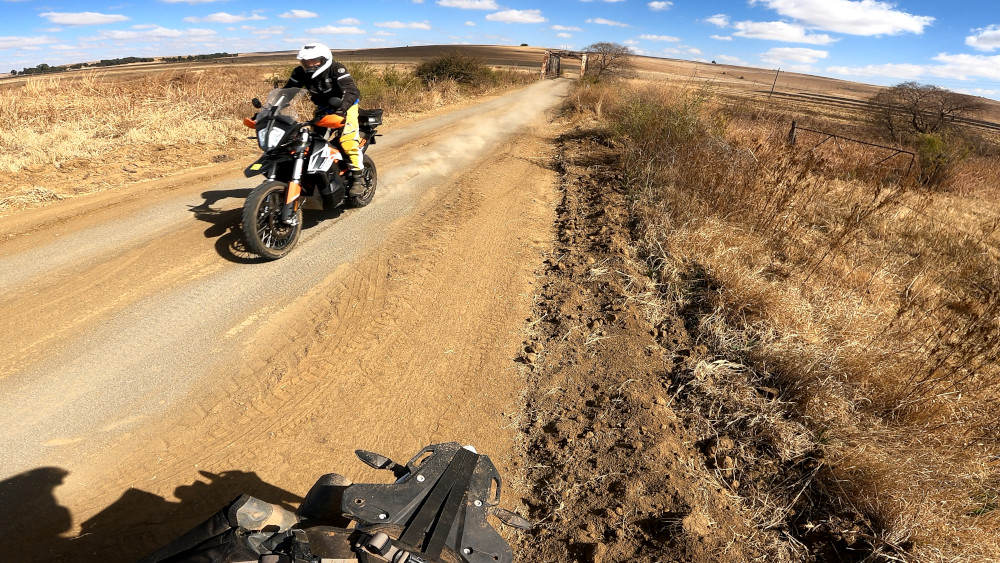
I met up with several other adventure bikers at the Witkop Blockhouse near the Engen south of Alberton. From here it’s quick to get onto gravel and our ride proper could begin. The roads were like gravel highways, several lanes wide and in great condition. We looped past the bottom of Suikerbosrand Nature Reserve and made our way to the tiny village of Dasville.
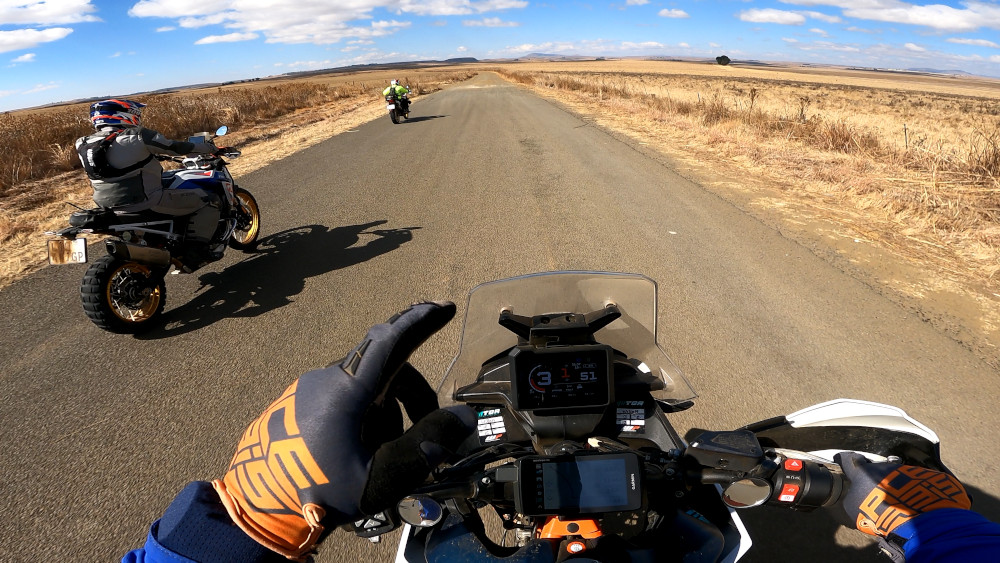
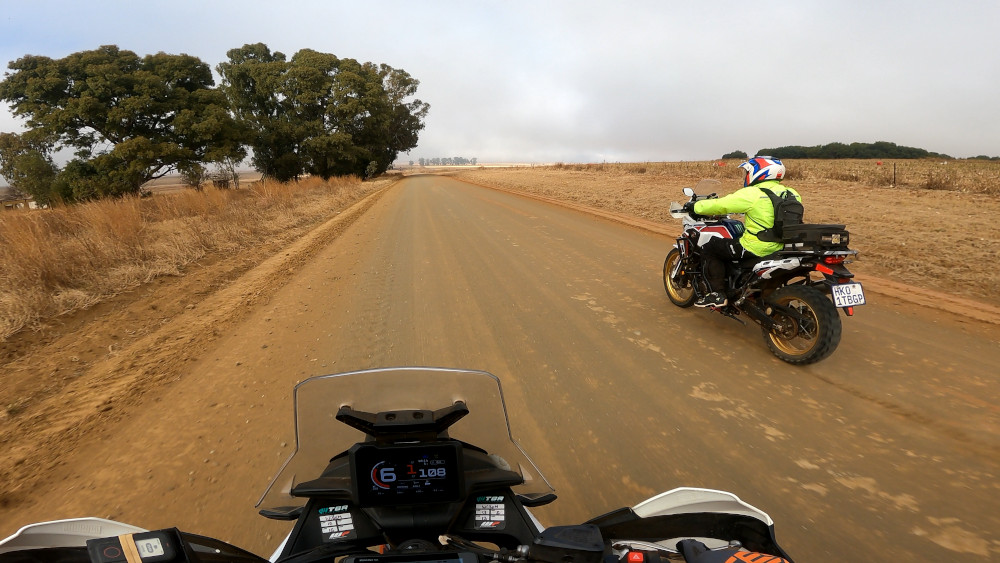
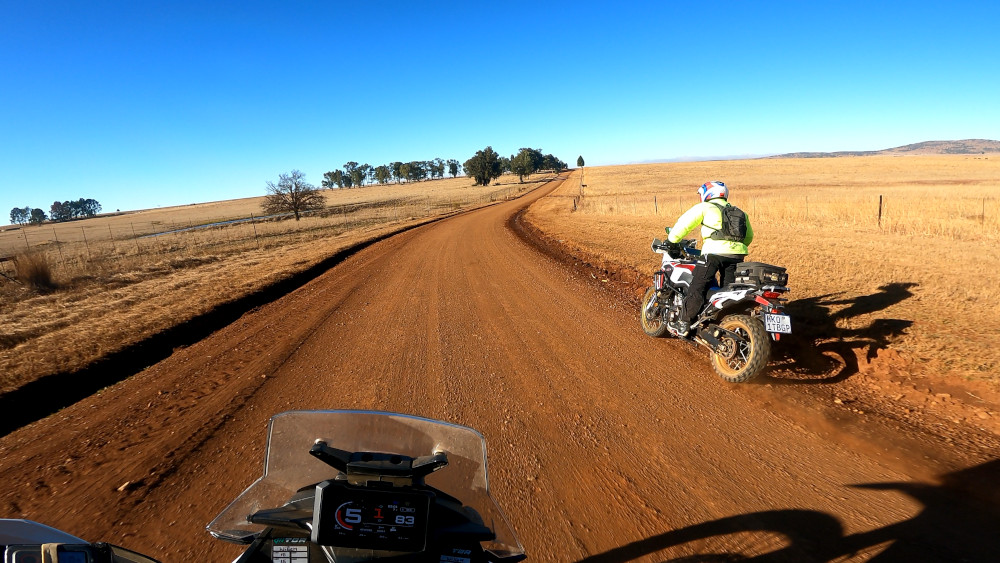
Since one of my fellow riders had a small tank, he was worried he wouldn’t make the 200km or so to Standerton. But thanks to the Tracks4Africa map, I picked up the Total Fuel Stop in Grootvlei just past Dasville. It was a cold winter’s day and the roads were deserted, so we could focus on the scenery. Rolling farmlands stretched out around us and the open horizon beckoned us on. Every so often the substrate below our wheels would change from light brown to sandy to red. Looking around, we could see the surrounding landscape change too.
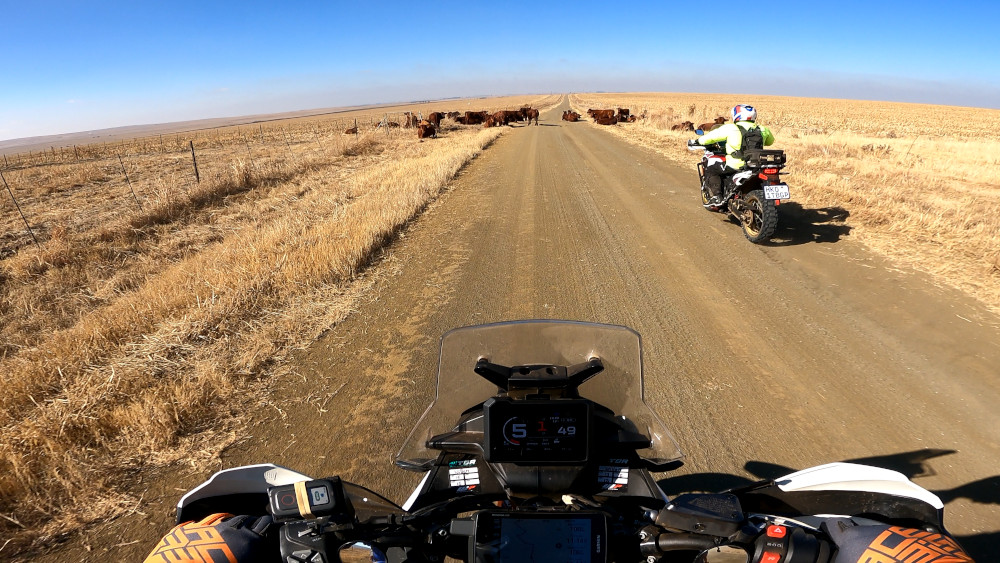
A word of warning: Keep your eyes peeled for livestock. We came around the corner on an open gravel road to find a herd of cattle directly in our path. We had to jump on the brakes to stop in good time.
About halfway to our brunch stop, we noticed a bank of cloud across the horizon. There was a cold front approaching and we were headed straight for it. We ended up riding right into a wall of fog: it became gloomy and our visors began to mist up. I could feel the cold piercing my layers. Luckily, we went through the fog bank and could continue our ride in the sun to Excelsior, where tannie Debbie had put together a spread that could feed an army.
South Africa’s smallest dorpie
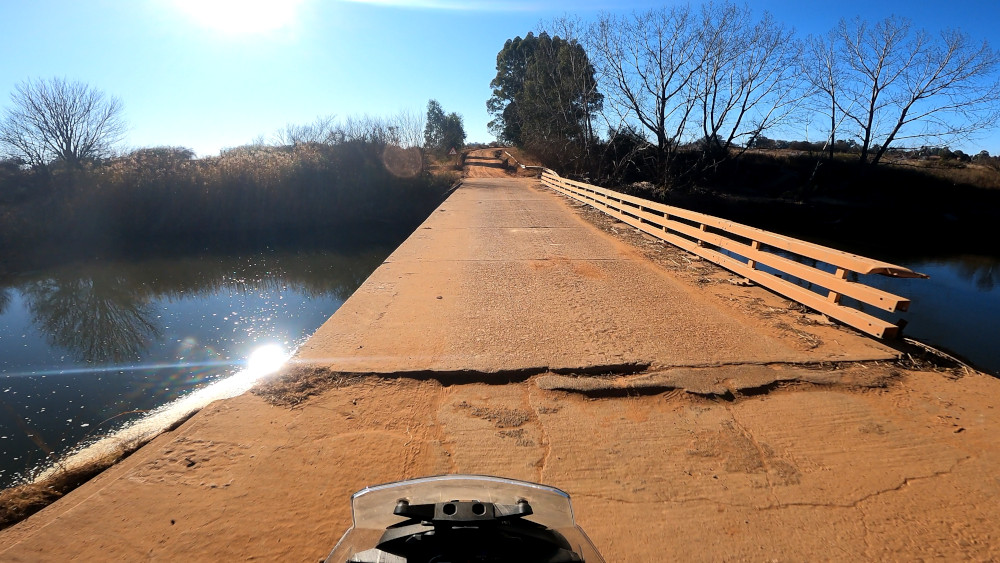
Riding on a diverse mix of roads – gravel, tweespoor and railway service tracks – we headed to Val. Here, the change in surface once again reminded us of the true spirit of adventure biking: expect the unexpected. The last few kilometres into the little village were on a surface of fine ballast rock, demanding adjustments to our riding style. The sensation of riding on this ‘bed of marbles’ can be unsettling, to say the least.
Val is always a worthwhile stop because it’s such a quaint, charming little place. And it really is tiny – within a stretch of a few hundred metres you can enter and leave the village. It’s a popular destination for Sunday lunch and I was hoping to enjoy a coffee at the legendary Val Hotel. However, shortly after leaving Excelsior farm, my friend Craig suffered not one, but two punctures. So by the time we rolled into Val, everything was closed for the day.
A historic landmark
The sun was low in the sky already, but we continued on gravel because I’d picked up something interesting on the map: the Whisky Train Monument.
The plaque on the monument tells a fascinating story. When the Anglo-Boer War was raging, the Boer fighters took to sabotaging the railway lines that resupplied the British forces. In December 1900, two brothers of the Heidelberg Commando derailed a train where it passed over a stone culvert near Val. Given the time of year, the train was carrying all kinds of delicacies and a magnificent amount of booze. Members of the commando were delighted by this bounty and, in the spirit of the festive season, they put the war aside for the moment and shared the spoils with their British enemies.
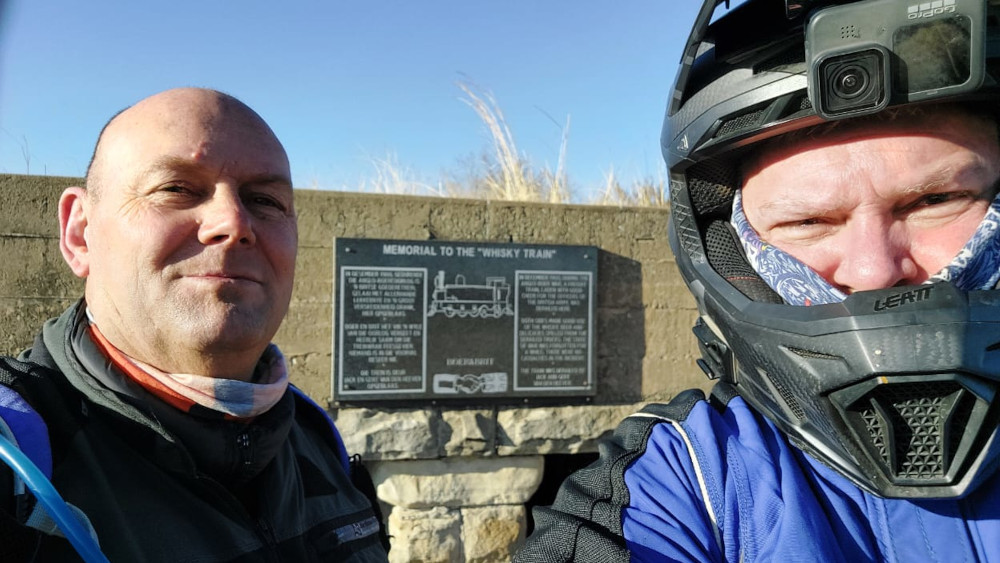
The Whisky Train Monument is just one of those curious things you’ll never see if you don’t get out there on gravel roads. And there’s no other map set that gives you access to these kinds of roads like Tracks4Africa. If you use one of the international routing apps, you’re either going to get lost or miss half of it.
It was getting late and, given the time lost in dealing with multiple punctures, we reluctantly took the ‘escape route’. Country tar, the R23, led from Greylingstad to Balfour and onwards to Johannesburg to take us home. The Seven Silos Dirt Ride had been one for the books.
Good to know
- The full ride is close to 400km, which is long for a day trip. To do the return trip on gravel, you need to be fit and comfortable riding for stretches of 100km without stopping. Alternatively, ride out on gravel and take tar back from Standerton.
- We found the roads mostly high-quality gravel, with one section of thick sand of 2-5km.
- The best time to ride it would be from April through to November. Fortunately, the area is quite temperate and the going should be good on a dry surface. You don’t want to ride in mud following the summer rain. Thanks to the quality of the dirt roads in the area, you have a little more grace and can probably stretch into early summer.
To see more of Willem Rudolph’s gravel routes, follow WillTour on Facebook.
Turkana Challenge ticks
Depending on which safari you’re doing in the Turkana Challenge, there are various options on this route.
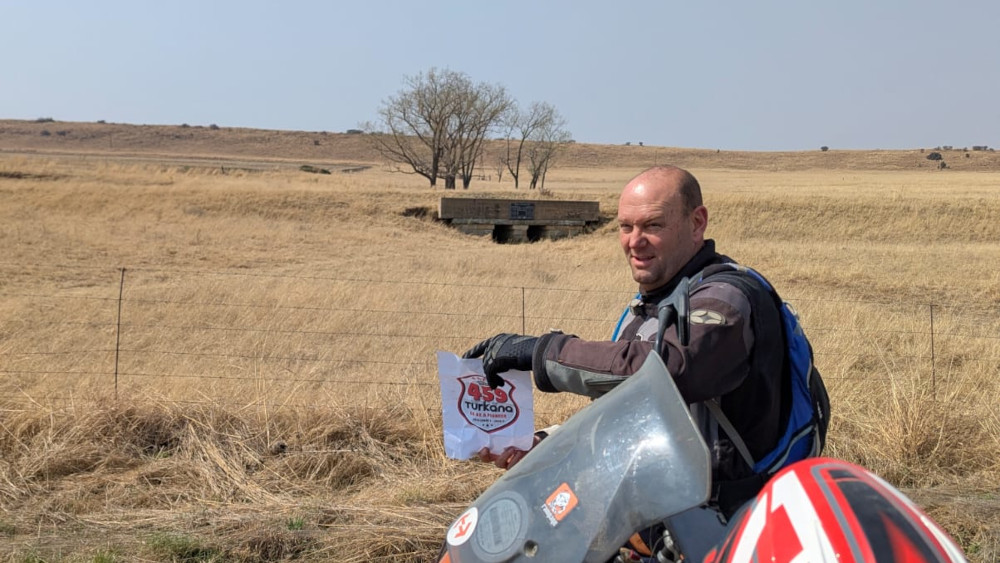
Warfields Safari Challenge
Blockhouse: Witkop Blockhouse
Anglo-Boer War battlefield: Whisky Train Monument
Historic Safari Challenge
Historic bridge: Whisky Train Monument
Derelict train station: Val train station
Bikers Safari Challenge
Do 1x400km day trip (depending on your point of departure)
